
Book Log 2025
1. Dreams: The Many Lives of Fleetwood Mac by Mark Blake (started 12/26; finished 1/19): B

2. The Wild Robot by Peter Brown (started 1/19; finished 1/22): B
3. Children of Dune by Frank Herbert (started 1/22; finished 2/27): B+
4. God Emperor of Dune by Frank Herbert (started 2/27; finished 4/2): A-
5. The Left Hand of Darkness by Ursula K. Le Guin (started 4/2; finished 4/14): A-
6. The Talent by Daniel D'Addario (started 4/16; finished 5/29): C+
7. Heretics of Dune by Frank Herbert (started 5/29; finished 9/5): B+
8. Bosco Verticale: Morphology of a Vertical Forest edited by Stefano Boeri Architetti (started 9/6; finished 9/19): B
9. Chapterhouse: Dune by Frank Herbert (started 9/19; finished 12/2): B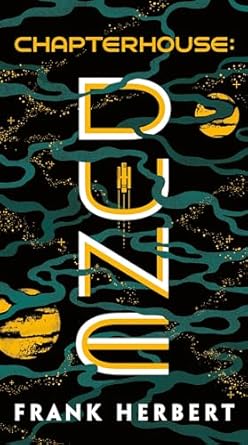
Boy, is this book a mixed bag. I have only read two other memoirs about Fleetwood Mac—both written by drummer/bandleader Mick Fleetwood, the first of them referred to in this book by Lindsey Buckingham as "trash," and the second one was fine, but a bit of a rehash. Will we never get the great book about Fleetwood Mac? Dreams reveals that several have actually been published, though most of them focus on either a single album or on a single author who was not in in the band but had a peripheral tenure with them in one form or another. I had high hopes for Dreams, but the genuinely great parts only serve as rewards for the lot of stuff you have to slog through. I am a true fan of the entire history of Fleetwood Mac, having long owned their albums dating back to the late-sixties, Peter Green British-blues era when they started. Still, there is no getting around the fact that things only get truly interesting once Stevie Nicks and Lindsey Buckingham joined the band, and this book does not get to that until page 145. To be fair, a ton of stuff happened with this band, not least of which was quite the revolving door of personnel changes, over the eight years that preceded Buckingham and Nicks. It just doesn't have the flair, the romance, the thrill of reading that came with the "classic lineup" that began in 1975—with a massive turning point coming with the "white Fleetwood Mac album" becoming their first-ever multi-platinum seller—only for it to be dwarfed two years later by Rumours selling more copies than any other had up to that point. These huge turns of events render their history prior not entirely irrelevant, but close to it. But author Mark Blake devotes chapters to every single member of Fleetwood Mac there ever was—no fewer than 18 of them, with 10+ pages devoted each to the "classic lineup" (Mick Fleetwood, John McVie, Christine McVie, Lindsey Buckingham, Stevie Nicks), and all of the others given fairly equal but far less time of just a few pages each. There are also chapters dedicated to every single album; key singles from most albums; many of the revolving romantic partners of band members; and key producers of their work. It's all presented in a very chronological way, which is why for nearly 150 pages I was interested but not fully locked in; and from the point Nicks and Buckingham appear and through to the end, I absolutely devoured this book. Still, this organizational style brings with it a kind of "empty calories" feel, covering anything and everything in the band's history and therefore by definition never getting into very much depth on anything or anyone. What's more, in the later chapters of the book, detailing the last 25 years or so of their history, Blake seems to lose a bit of his dedication to things like, well, fact-checking. In the chapter on the 1997 live album and tour The Dance, Blake simply lists every single song in the setlist on the concert special that aired that year, editorializing with dubious authority, and making at least two glaring errors (the blurb that is clearly about "Over My Head" is inaccurately labeled "Over and Over," a song from two albums later; "Say You Love Me" is referred to as a "1977 hit" but was released in 1976 from the white Fleetwood Mac album, whereas 1977 was when Rumours was released). It feels like an increasing lack of attention to detail as the book nears its end, which only makes me wonder what else in the book that I took at face value was actually incorrect. Honestly, a better idea might be five separate biographies of the same length, dedicated to each of the "classic lineup" members. This would provide an opportunity for much more compelling contextualization of the early years, for instance, with Mick Fleetwood and John McVie. I'd be all over that shit, especially up-to-date biographies on Stevie Nicks and, in particular, the true glue that cemented the band's vocal chemistry: Christine McVie. Given that she passed away in 2022, finally cementing the end of Fleetwood Mac once and for all, it's fitting that Blake ends Dreams with the chapter dedicated to her. It's all of twelve pages, though, beginning with her birth and ending with her death. And as with every other chapter in this book, how can that possibly do the subject justice?
2. The Wild Robot by Peter Brown (started 1/19; finished 1/22): B
Here is one of those rare cases where seeing the film adaptation does the source material no favors. I did enjoy this book, but to say it's for "young readers" is very true: its pretty simple language makes it feel aimed at even younger readers than the early Harry Potter books. I do appreciate this book's subtle nods to the harshness of life for wild animals as well as the ultimate impact of climate change, but I was much more charmed by how these things were handled with greater sophistication in the film. Maybe I'd love the book more had I read it as a child, but the film has greater success at reaching both children and adults at their own levels simultaneously. To be fair, the book still works very well on its own terms, and it's an breezy, fun read.
3. Children of Dune by Frank Herbert (started 1/22; finished 2/27): B+
While I was still Children of Dune, I concluded somewhat prematurely that I liked it better than Dune Messiah. I might still stand by the idea that I enjoyed Children of Dune more than Dune Messiah, but is it a better novel? Having gotten to the end, I have become more ambivalent about the idea, especially with the utterly bizarre wildness of Leto II Atreides's fate. After the onset of his (literal!) metamorphosis, Leto demonstrates his superhuman strength in ways that effectively turn him into a cartoon. I suppose I shouldn't complain, given the presence of gas-floating fish-men in the previous novel. But, much as I loved Children of Dune, I must confess the feeling of something missing that had been far more present in the previous two novels, a density of themes and philosophy that this novel does not quite engage with to the same degree, in favor of a much more straightforward narrative thrust of story. I actually deeply appreciate this and found this novel eminently readable; as always, I long to return to the Dune universe any time I leave it. That said, this book ends with its very own universe upended, with far less to compel me to stay and find out where it goes from there. Which is to say, I really loved this book and yet am ambivalent about how it ends. To be fair, none of these books end with the greatest outlook for the future it presents, something I really respect. Still, with each successive novel in this series, I begin to feel the very slightest hint of diminishing returns. Prone to giving this series of novels the benefit of the doubt, I am still poised to read God Emperor of Dune next, with expectations tempered by knowledge of the massive time jump and very different narrative style. It remains to Frank Herbert's credit that it doesn't seem to matter how bonkers things get, I am still interested.
4. God Emperor of Dune by Frank Herbert (started 2/27; finished 4/2): A-
Here is the eternal question, the one for the ages: is humanity worth saving, if the cost is 3500 years of universal tyranny? If we know from the beginning of that period that this is the cost, is it a cost we would, or should, accept? Does it really matter to us, if the turning point humanity needs in order to keep going does not come for another three and a half millennia? This, for me, was maybe the most compelling question, but one among many, elicited by the fantastic God Emperor of Dune, instantly my second-favorite of the first four in the Dune series of novels. I went in feeling wary, because of very slight but still present diminishing returns from the previous two books, and found this one significantly exceeded my expectations. Admittedly, those expectations are tempered when you find out the setting is 3500 years later than Children of Dune; the "God Emperor" of the title is now a hybrid sandworm-man; and he spends a ton of the time having conversations with people that run the gamut from narcissistic to bewildering—yet, they are consistently sprinkled very provocative and fascinating philosophical ideas, if not always fitting neatly into "right" or "wrong." My contempt for Leto Atreides II only grew consistently as the story went on, which I can only presume was by design. And, as with all of these books, no other character quite qualifies as a "hero," and they are only people who play their part in the course of history by virtue of the very human and fallible decisions they make. These are the kinds of nuances that make great novels.If I had any complaint about this installment, it would be a couple passages of deep homophobia clearly borne of Herbert's era (not excusable, but understandable), and a percolating illustration that Herbert had very reductive concepts of gender roles, even as his earlier novels come across as progressive on that front, on their surface. These novels were written long before there was any real cultural understanding of nonbinary gender or even the degree to which gender is a social construct, and while Herbert is intentionally playing with these ideas, they still come from a fundamentally conservative foundation. And yet: I manage to look past these details because the story is otherwise so spectacular.
5. The Left Hand of Darkness by Ursula K. Le Guin (started 4/2; finished 4/14): A-
If science fiction is not so much about the future than it is about the present, it should be noted that The Left Hand of Darkness is much more about the time in which it was first published (1969) than it is at all about today, as I write this mini review. As a longstanding gender-nonconformist (possibly I would identify as "nonbinary," if I were younger; I'm just too old and tired of the prospect of blowback to deal with it—I went through enough just coming out as gay 25 years ago), it comes as no surprise that this novel speaks to me on a deep level. This is about an intergalactic Envoy named Genly Ai, visiting the planet Gethen, known by those on other worlds as "Winter" due to it being in the middle of an ice age—and all the humans populated thereon are ambisexual, and thus with no concept of separate genders.
Le Guin is ingenious in her narrative approach, never making the story overtly about challenging gender normals and assumed characteristics based on sex, but the challenge is there all the same, just by this book existing. Genly must face many of his own prejudices as he navigates this world as an alien, called a "pervert" by the inhabitants who cannot understand a body that stays in a fixed state of sexuality. The world presented here is rendered with vivid completeness and detail, much of which subtly informs the cultures that are often incomprehensible to Genly.
I might come close to calling this novel a literary work of perfection, if not for just one nagging detail: Genly's insistence on using he/him pronouns for all Gethenians. Not only does this challenge the very purpose of presenting an agendered world by mere implication of vocabulary, but it would be wrong to assume it's an innocent byproduct of "a different time" when, say, English rules of language dictated that male pronouns are to be used when speaking generally of all sexes or genders. Le Guin was criticized for this choice even at the time the book was published. What workable answer there may have been, aside from switching to "she/her" as a pointed challenge to patriarchy, we cannot know: gender neutral pronouns were nowhere near as common or understood then as they are now—although reportedly "they/them" was still an understood case usage, which, according to the Afterword in this 50th anniversary edition written by trans author Charlie Jane Anders (who, while still expressing deep affection for the novel, was overly critical of it in my opinion), Le Guin felt was too confusing.
It's a fascinating thought experiment to consider how The Left Hand of Darkness might have been written were it done in 2025, but, the 1969 version is all we have. I got past the pronouns quickly enough, and locked into the idea of a version of humanity with no fixed sex. (They only even become sexual for a few days per month of a lunar cycle, the process explained very well in the novel, which has no sex scenes to speak of, but touches effectively on how sexuality can affect interpersonal relationships, particularly during these few days.) Genly has an arc over the course of the entire novel with an evolving relationship of trust to distrust and back to trust again, with one local named Estraven who does all they ("he" in the book) can to help Genly succeed in his mission, which is to persuade the nations of Gethen to come together as a planetary entity and join a confederation of planets called The Ekumen. Together, they travel across two neighboring and rivalrous nations on the planet's one "great continent," an experience with a dash of adventure but mostly fraught with peril—nearly the entire second half of the book is dedicated to just the two of them traveling from one nation to the other across glaciers. In the end, though, especially for a book all of about 300 pages long, the story is as deeply fulfilling as it is provocative.
6. The Talent by Daniel D'Addario (started 4/16; finished 5/29): C+
I haven't rated a book this poorly in 17 years. It makes sense, because as a rule, if a book fails to keep my attention, I just don't bother to finish it. But, I had such high hopes for this novel, about the five-way race between fictional Best Actress contenders. It makes sense in retrospect, but I didn't think about how the book would have to avoid using copyrighted terms like "Oscar" or "Academy Award," or even "Golden Globe," so D'Addario has to spend all his time making vague references to these awards, like "the big prize" or "second-most important" or whatever. That's the least of this novel's problems, though, which I thought promised a deeply inside look at how campaigning for Academy Awards works, for good or for ill. There's a bit of that, and it kicks up a notch in the final stretch of chapters, but I quickly grew tired of these alternating chapters offering portraits of these women's public and private insecurities, about themselves and in relation to each other, and little else. Furthermore, I could never keep all the characters, or the fictional movies they were getting nominations for, straight. It made it very difficult for me to lock into any one of them as characters. By the end, I got fairly close with . . . maybe two of them. I stuck it out to the end because I love the Academy Awards, and movies in general, so much. But this novel, in the end, was short on insight and long on trivialities.
7. Heretics of Dune by Frank Herbert (started 5/29; finished 9/5): B+
Well, this is by some distance the longest it's taken me to finish a DUNE book—but that doesn't mean I'm not still locked in! This is just a matter of everything else going on in my life, and reading it over the summer months when I'm biking to work rather than bussing or walking when I could otherwise be reading. That said, this novel is not nearly as packed with provocative ideas as was God Emperor of Dune, and returns to a kind of action narrative, albeit a riveting one, that also very much characterized Children of Dune. I did find some of it kind of difficult to follow, as this novel is as dense with information as ever, which also reminded me of my experience with Dune Messiah. In short, by DUNE standards, I hesitate to call Heretics of Dune a standout, although it certainly stands out compared to most other science fiction. This one's more for the DUNE die-hards, a group I can think I can count myself among. I do love that this one focuses on so many women as its main characters, way more than in previous novels—but then, what Herbert is doing with his exploration of sex as a weapon here feels a little elusive, maybe even dubious. No matter what though, as always, I just love spending time in the DUNE universe. I have not locked into a series of novels like this in twenty years, and I very much look forward to reading the next (sixth) in the series. It's both fascinating and incredibly impressive how successfully Herbert keeps our attention even when setting the fourth novel 3,500 years after the third; and then this fifth novel 1,500 years after the fourth. Even though we took Paul Atreides's journey with him in his own time, by the time we get to Sheanna and Lucilla and Odrade and Taraza and Teg (and the latest in a countless line of Duncan Idaho gholas) five thousand years after Paul's time, there's a deep feeling of authenticity to these characters' references to what by then have become ancient, holy texts. Even with all the unreal things that happen in this universe, DUNE as a series very effectively demonstrates how history becomes mythology over thousands of years.
8. Bosco Verticale: Morphology of a Vertical Forest edited by Stefano Boeri Architetti (started 9/6; finished 9/19): B
This one is very much for a niche audience, particularly those with an architectural or horticultural backgound—and especially those who are both. I have neither, but I have had a broad fascination with skyscrapers since the age of 14, so when Barbara messaged me a link to a BBC article about "high-rise forests," a unique type of skyscraper I had never heard of, it extensively referenced this book about the 10th anniversary of the first such skyscraper ever to be built: the "Boscoe Verticale" (literally "Vertical Forest"). Built in Milan in 2014, it consists of two towers, one 381 ft and 27 stories tall; and one 276 ft and 19 stories tall. This book, on the other hand, is 12½ inches tall and 9¾ inches wide—still much larger than your average novel, and a bit awkward carrying it to work and back and especially hiking it up to the public terrace in my office building for lunch breaks. It's really more of a coffee table book, though, with many pages dedicated only to glossy photographs of these towers from every conceivable angle. There's still plenty of text to read, though, and in a style pretty conducive to those sorts of fits and starts, but this is why it only took me about two weeks to finish, rather than the months it usually takes me to finish a book (particularly long books, like the Dune novels). I did find this book quite fascinating though, including the detail that the project was built adjacent to the roughly 23-acre Biblioteca degli Alberi Milano ("Library of Trees" in Milan—also know as BAM), which itself opened in 2018. Much like the massive amount of parkland surrounding the Adelaide CBD in Australia, I am always fascinated by urban planning that integrates nature in some way. Of course, Bosco Verticale: Morphology of a Vertical Forest is nothing but celebratory, with only a couple of vague references to criticisms, and says nothing about the inherent carbon footprint of built skyscrapers no matter how many trees and plants they stick all over the facade. (Anything about about five stories makes a building very difficult to become carbon neutral.) I think about this a lot, even as my love of skyscrapers continues unabated—and, I suppose, buildings like the Bosco Verticale has plenty going for it in terms of offsets, especially as most skyscrapers are actually far taller than these ones. Presumably that was a factor in determining the height of these towers, which I will certainly go out of my way to get a look at if for whatever reason I ever find myself in Milan. I probably won't, but there are other "Vertical Forests" in other cities around the world, including a few I do plan to visit, so those are now on my lists as points of interest as well.
9. Chapterhouse: Dune by Frank Herbert (started 9/19; finished 12/2): B
Much like Dune Messiah felt like an extended epilogue to the first Dune, Chapterhouse: Dune felt to me like an extended epilogue to the entire, six-novel Dune Saga. I enjoyed being in the Dune universe, as always, but this book seemed to lack a the specific hook that made all the other novels uniquely compelling. In Dune, it was the novelty and the universe itself, with deeply layered cultural textures and inqualities of power structures. In Dune Messiah, there was the haunting, yet almost addictive, quality of Duncan Idaho first appearing as a ghola, with his emotionless, metal eyeballs (a detail curiously never mentioned again in later books). In Children of Dune, we follow the very young twin offspring of Paul Atreides, born with prescience. God Emperor of Dune is the most bonkers and yet my second-favorite book in the series, with Leto II metamorphosed into a worm-god, surviving 3,500 years. Even in Heretics of Dune, set yet another 1,500 years later, we get the mysterious Sheanna, shockingly able to control sandworms. But: Why? Merely being an Atreides descendant of Siona doesn't feel like enough of an explanation to me, but whatever. This is my hangup with the last two Dune novels, which introduce more mysterious elements than they ever explain, and I want answers! Chapterhouse: Dune leans the most heavily into "Honored Matres," the lethal adversary society to the Bene Geserit, and "Futars," the sub-intelligent feline humanoid creatures both controlled by and (weirdest of all) sexually imprinted to Honored Matres. Sheanna still figures relatively prominently, this book being set only two years after the last, but—spoiler alert!—we still never find out exactly how Sheanna can control sandworms, only that she is revered because of it, as transorted sandworms from the destroyed Dune planet develop on the Chapterhouse planet, in so doing also quickly turning the entire planet into a new desert. I never felt like I got a clear picture of where the Honored Matres are coming from, how they became the violent conquerers they are, or the existential threat it's eventually revealed, without any detail, they are running from. (Apparently later books written by Frank Herbert's son, Brian, offer explanations, but I don't care; I've read enough to know only Herbert's original books are worth my time.) I can only say that although I could never fully grasp exactly what the hell was going on, Chapterhouse: Dune kept me turning the pages—the one thing fully consistent across all six novels. That said, even Chapterhouse: Dune is only easily recommended to Frank Herbert-Dune completists, and it ultimately finishes as my least favorite of the original six. It's still worth noting that the original Dune, something I now regard as one of the greatest novels ever written, sets an extraordinarily high bar, so even other Herbert novels in the same universe that don't quite stack up to it still remain great. I have no doubt whatseover that I will eventually read this entire six-book series again.