
FATHER MOTHER SISTER BROTHER
Directing: C+
Acting: B-
Writing: C-
Cinematography: C+
Editing: C-
Look. Don’t talk to me about the “beauty in the ordinary.” We all get more than enough of the ordinary just walking down a residential street on any given day. Or, in an example much closer to the vibe of Father Mother Sister Brother, simply staring at a blank wall.
Every time I see a movie like this—or, more to the point, a movie that leaves me baffled by its very existence—I find myself imagining the talent reading the script for the very first time. All these people, in this case an ensemble cast of eight mostly-great actors, wanted to do this?
It would seem there is a whole lot here just flying way over my head. Over at MetaCritic.com, this film has a rating of 76 out of 100. It has a Rotten Tomatoes rating of 81%. It seems worth noting that the user ratings on these sites are 6.4 out of 10 and 46%, respectively—and there’s nothing “woke” here for people to stupidly review-bomb. This may be a rare case in which the populist response is actually the voice of reason. You won’t find any pretensions toward an inflated sense of worth in this review—Father Mother Sister Brother does more than enough of that on its own.
Which is to say: holy Christ was I bored by this movie. In my opinion, writer-director Jim Jarmusch has a spotty record at best; my favorite film of his would have to be Only Lovers Left Alive, about a vampire couple contending with the prospect of being together for eternity, and I gave that a solid B. It was an absolute thrill ride in comparison to this film.
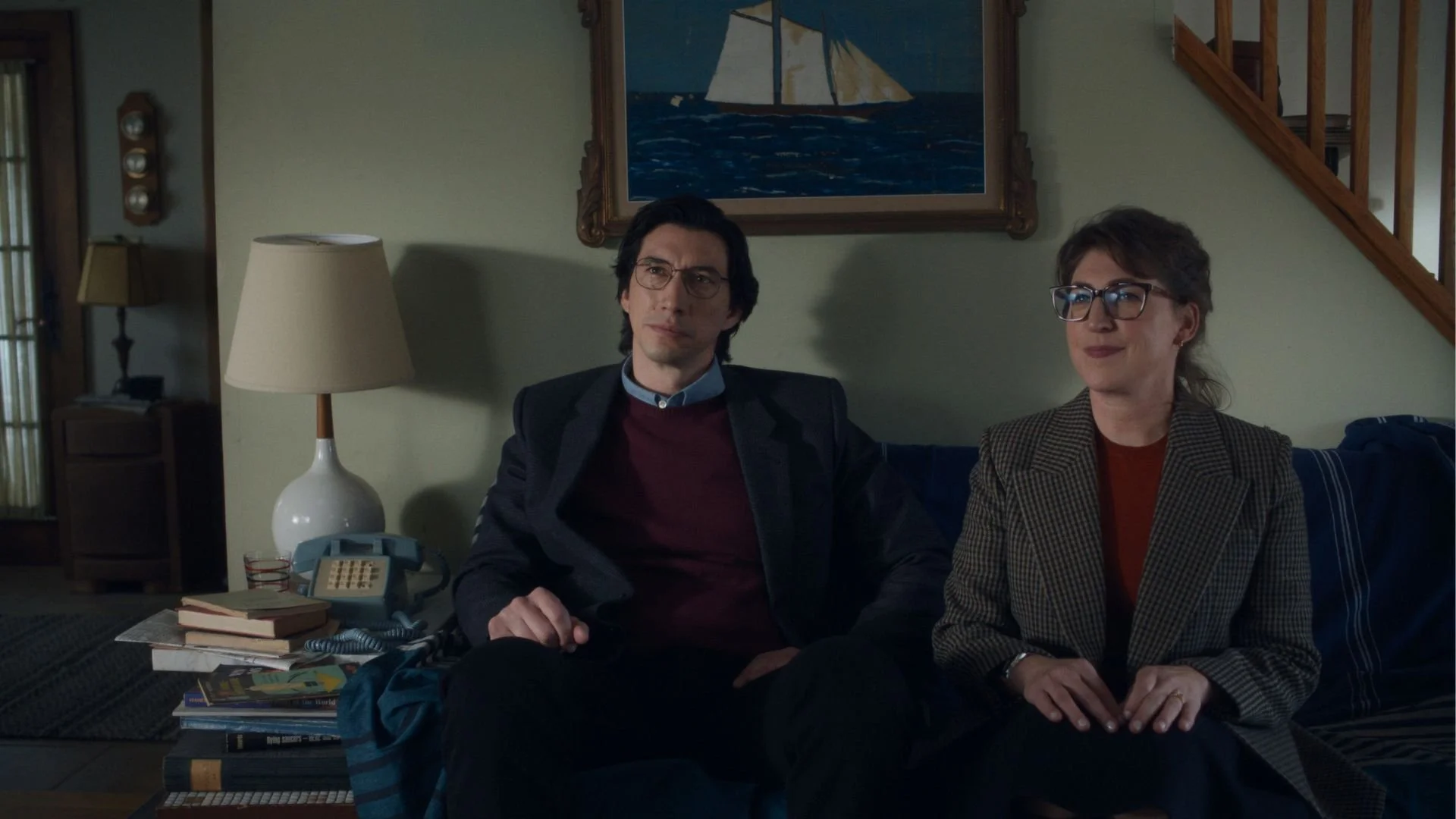
Jarmusch’s project this time is to present an anthology, three separate stories with a thematic connection: the death of a loved one hangs in the air at all times. There are some viewers who find something profound in this. I did, too: profound boredom. Halfway through the first story, “Father", in which Adam Driver and Mayim Bialik play siblings on a deeply awkward visit at the home of their widowed father played by Tom Waits, I thought: Is the whole movie going to be like this? It was not long into the second story, “Mother,” in which Cate Blanchett and Vicky Krieps play sisters on an annual visit for tea with their mother, played by Charlotte Rampling, before I realized: Yes, I guess it is. And when the third story was presented as “Sister Brother” and I realized there was only one more story and not two, I thought: Oh, thank God. In that one, by the way, Luka Sabbat and Indya Moore play twins visiting the emptied home of their parents who died in a small plane crash while one of them was flying it.
There are several details Jarmusch playfully—I use that term loosely—puts into all three stories. All of them feature extended shots of the adult children driving cars. All of them feature characters wearing, and commenting on, a Rolex watch. In all three of them, one character utters some version of “Bob’s your uncle.” In all of them, the characters have tea—although in the third one it switches to coffee. In only the first and third one, a toast is made with their drinks; in the first the question is asked whether you can toast with tea, and in the third the question is asked whether you can toast with coffee.
Playing the game of keeping track of these common details in all three stories is the best chance you’ve got at staying awake. Seriously I could have slept through this entire movie and gotten as much out of it. Even identifying the common details got tedious after a while, because it was the closest thing to anything actually happening in any of the scenes, and by the end these touches felt forced and contrived.
I took particular issue with “Sister Brother,” in which the twins’ backstory made little sense. They’re clearly in France, they’re ostensibly visiting the apartment they grew up in, but they both have American accents? Maybe the family moved here when they were teenagers. But then they examine multiple IDs and birth certificates left behind by their parents, and this is somehow the first time they learn they were born in New York.
Father Mother Sister Brother is brimming with intentionality; it’s clear that nothing in it is accidental—including the long, awkward silences that characterize most of the 110-minute running time that felt to me like an eternity. I can’t remember the last time I was so happy a movie was over. There is a tone here not far off from that of the 1975 film Jeanne Dielman, 23 quai du Commerce, 1080 Bruxelles, which somewhat famously topped the latest Sight and Sound Greatest Films of All Time poll in 2022. That film also marinates in the ordinary, only in that case for three hours and 22 minutes. The key difference is that Jeanne Dielman has a point it makes far more clearly. I left the theater at a loss as to the point in Father Mother Sister Brother.
Maybe Jarmusch is your thing. He really isn’t mine.
Overall: C