
Tasveer Advance: ELEPHANTS IN THE FOG
Directing: A
Acting: A
Writing: A
Cinematography: A
Editing: A
It’s a challenge to find lived-in, stereotype-free representation of trans people in cinema broadly, but rarer still to find any kind of trans representation at all in international feature films. Enter director and co-writer Abinash Bikram Shah, with a truly stunning debut feature film Elephants in the Fog, starring Nepali trans activist Pushpa Thing Lama—also in her film debut. Several trans women actors are featured here, and this was the film debut for most of the cast; this is a big part of what makes the film such an extraordinary achievement.
The community depicted here is known as Kinnar, a legally recognized third gender in Nepal since 2007—the first country in South Asia to grant such recognition. (This community was given legal recognition in Pakistan in 2009; India in 2014; and Bangladesh in 2013.) In much of South Asia this community is known as Hijra, but in this film the Nepalese characters default to the evidently more respectful Kinnar—at least when the women in question are referring to each other.
Legal recognition or not, there remains cultural discrimination and oppression, as with anywhere on Earth. In South Asia, however, there is a sort of tenuous tolerance of this community, widely seen to be capable of either blessing or cursing. We see these characters in Elephants in the Fog clapping their hands together as part of this ritual, its intent contextualized by attitude and demeanor. In many scenes, one of these women is seen granting a blessing at weddings or to a pregnant woman. They are given often meager amounts of money for this service, and this is how they make a living, all the while living in a tightly structured community with a spiritual leader and a vow of celibacy.
It is within this framework that the story of Elephants in the Fog unfolds. I suppose I could give a trigger warning: this is indeed a tragic story—but not in anywhere near the typical way trans people have long been depicted in film. Pirati (Pushpa Thing Lama) is “mother” to several of the other trans women in this community, including the recklessly rebellious Apsara (Aliz Ghimire), who goes missing shortly after a confrontation between the two. These women share a house in a vollage bordering an area where dangerous wild elephants roam, and the immediate assumption is that Apsara may have been trampled in that adjacent forest.
The bulk of the story involves Pirati’s obsessive search for her, in the face of police indifference and building community resentment of this entire Kinnar community. This is all complicated by Pirati’s own hypocrisy, as she is engaged in an affair with a man who lives in the city of Birgunj, a little over 30 miles away. Pirati is all stoic resolve, but her refusal to give up even as she endangers her own standing among her “daughters” indicates a deep-seated guilt.
Apsara’s ultimate fate is not what we spend the movie expecting, and yet it’s deeply tragic in its own way. What makes Elephants in the Fog work so beautifully is how flawed all of these characters are—these are not magical heroines in the face of their oppression. They are simply surviving, and in this exceptionally well-written script, they are fallible and messy, just like all human beings. Rarely do trans characters come across as so well-drawn, their community and environment so authentically lived-in.
Elephants in the Fog is also beautifully shot, by cinematographer Noé Bach (in this case, far from a film debut: Bach has been working since 2012). The film’s budget does not appear to have been made public, but it’s probably safe to assume it was relatively small; I found myself wondering whether we would get to see any elephants at all, or if they would remain unseen and, to a degree, merely metaphors for partial truth. Never fear, though: elephants do get some screen time, but they are used so sparingly that their impact is incredible, and in the end almost overwhelming. The final shot of this film is one of the most powerful in any film released all year.
Indeed, Elephants in the Fog will easily be one of the best films I have seen all year, if not the best film I’ve seen this year—a bit of a frustration, in that I cannot tell you where to see it: there has not yet been any U.S. theatrical release date announced, and if there is one, it will not likely be until sometime in 2027. But I cannot ignore this film until then, because it simply cannot be ignored. I implore you to make a note of it, and see it as soon as it gets U.S. distribution.
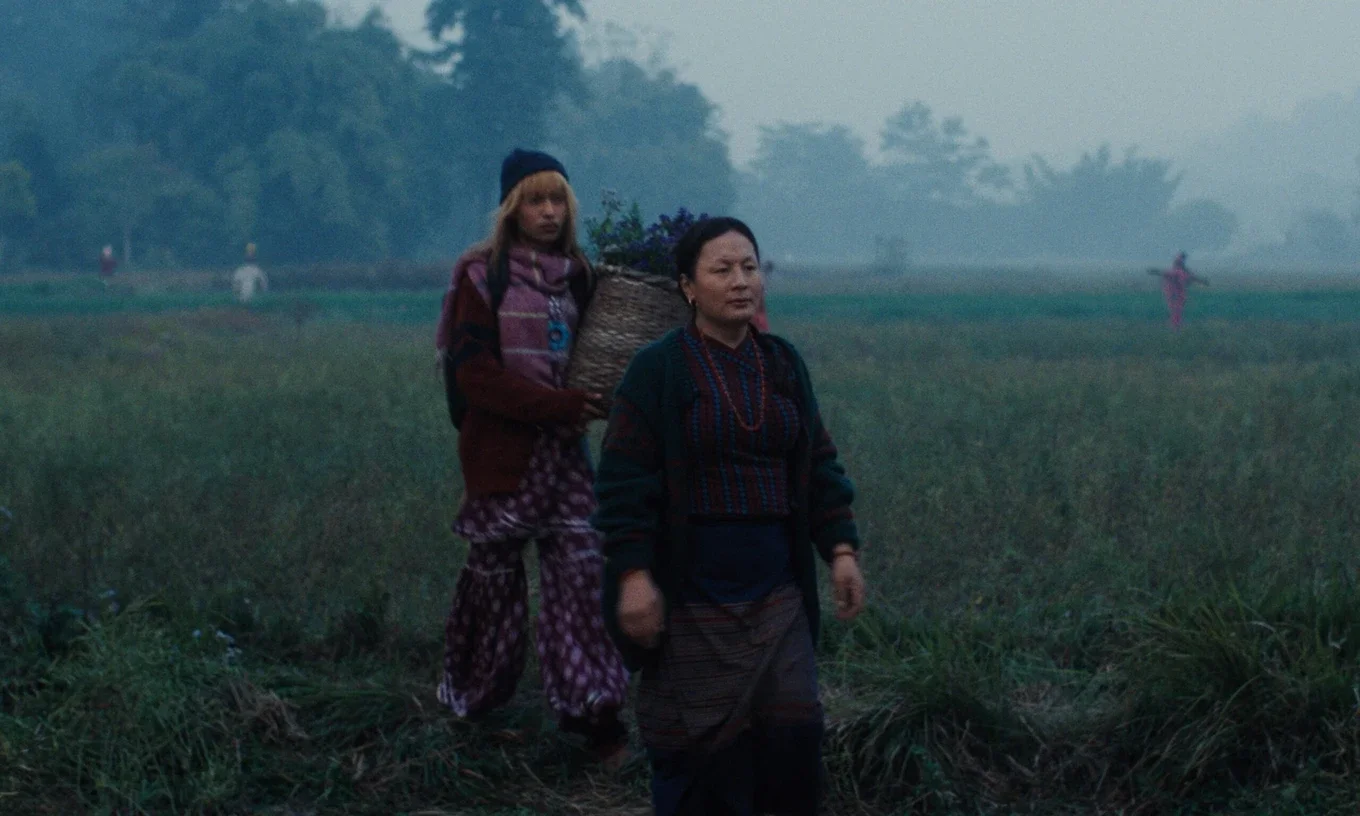
Kinnar in the Fog: a beautifully painted portrait of a very specific community.
Overall: A