SIRĀT

Directing: B
Acting: B-
Writing: B
Cinematography: A
Editing: B+

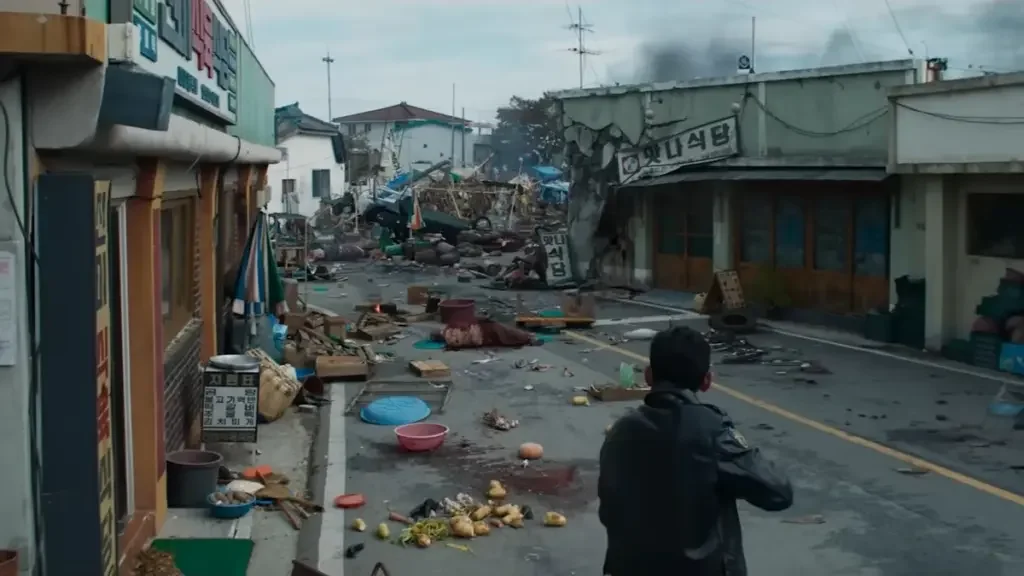
As I consider Sirât, the Spanish nominee for Best International Feature, I keep thinking of the 2021 film from Mexico, New Order, which was so deeply nihilistic it left me baffled, bordering on angry. There is no question that Sirât is a better film, and yet I am not convinced there was any more of a point to it. Sirât is far more subtle with themes that New Order beat us over the head with, but I still could not in good conscience recommend it to anybody.

Some truly horrible things happen in Sirât. I went in already knowing the first horrible thing that happens; I just did not know exactly when or how it would occur. I can’t say knowing about it ahead of time made it any less horrible to witness, this scene alone left me deeply rattled, mostly because it comes out of nowhere during what is otherwise a perfectly normal scenario: people working together to change the tire on a traveling bus on fairly treacherous Moroccan desert mountain roads. What I was not prepared for was how things sort of settle a bit after that, only for things to get even worse.

This is a film clearly working in broad, existential and spiritual metaphor, even though on the surface everything is very grounded in reality. It is explained to us in an opening title card that Sirât refers to the Islamic theological idea of a bridge one must cross, “thinner than a hair and sharper than a sword,” over hell and into Paradise. The faithful will cross successfully and the sinful will descend into hell. Now, I know next to nothing about Islamic belief, so it’s not only conceivable but likely that my Western mind lacks a certain understanding of nuance here. (Although, side note: after reading a few other reactions to this film, it’s clear there are people from the region who feel director and co-writer Oliver Laxe is dabbling with real-life geopolitcal tensions he has no business playing with.)

All I know is, not only do the characters in Sirât have horrible things happen to them, but they happen at random and without any directed malice. These are all perfectly decent people, basically minding their own business and helping others in whatever ways they can, and tragedy befalls them out of nowhere. The only pattern to be found is the quick succession of sudden horrors befalling this one group of people.

I’m not eager to tell anyone else to sit through this movie, which I found compelling until I found it by turns horrifying and deeply stressful, but I still won’t spoil specifics. I’ll just say that it begins with Luis (Sergi López), a middle-aged man, and his son, Esteban (Bruno Núñez Arjona), milling about a desert rave in Morocco, handing out flyers and looking for Luis’s older child, Esteban’s sister. We never do find out how long she’s been missing (except that it’s been a long time) or why she’s apparently lost; these two only know that she frequents these desert raves.

The rave music figures prominently in the plot of Sirât. I haven’t been to a rave since college, so my impression of them is that they occur overnight in dark lofts or basements, packed with young people on relatively harmless drugs and surrendering to the beats. This was roughly thirty years ago, so clearly I don’t know what the fuck is going on now; a quick Google search indicates there is indeed a thriving desert rave scene in Morocco. It would seem these are still typically overnight affairs, but all of those seen in Sirât appear to be happening midday. This is the case during the opening credits identifying the principal characters other than Luis or Esteban, nonprofessional actors found for director Oliver Laxe and given the same character names as their real first names. After this, we don’t actually see the title, Sirât, until 30 minutes in.

By that point, Luis and Esteban, still desperate to find their lost family member, follow a small caravan of vehicles on their way to another rave after military has come and forced a rave to break up. We’ve already gotten very sporadic snippets on car radios about nations in the region descending into armed conflict, and it’s serious enough for citizens of the EU to be singled out for evacuation. The smaller group of ravers that Luis follows in his car have little interest in it, aside from a passing reference to “World War III” that doesn’t seem to be taking it very seriously, even though some of them appear to be seriously injured veterans themselves: one with a missing leg who walks on what looks like a repurposed crutch; another with a missing hand. There is another passing reference to them being “deserters” but with no further detail or contextualization.

I am reminded yet again of that other film, New Order, in which the narrative takes us into the thick of the violent chaos—in that case a senselessly violent overthrow of the elite by the underclass. In Sirât, we have a group of people who have deliberately separated themselves from the violent chaos, escaping into drugs and beats but otherwise pretty pacifistic. And unsettlingly terrible things happen to them anyway. And in the most straightforward sense, there is no rhyme or reason to it.

So this is where the intended takeaway is up for debate, I suppose. The final sequence in Sirât was so tense I could hardly handle it. They cross a lethally dangerous path, which some cross unscathed and others do not; presumably there is profound importance to the line, “I just crossed without thinking.” This is his response to how he made it work, while another did not succeed.

And in the end, this is all we know about any of these people: only that some of them have dedicated their lives to raves, and that Luis is looking for his daughter. We don’t hear anything about Esteban’s mother, or about any of the ravers’ lives up to this point, at least not beyond a vague reference to desertion. Earlier in the film, one of the ravers turns off the radio announcer detailing what’s going on in the country, presumably because all they want to do is shut out the realities of the wider world. Beyond that, Sirât simply follows a small group of people who either meet violent ends or barely miss violent ends. The image of the first incident is so simple in its horror, something we hear rather than see directly, is something I will not soon shake, even though it is only the shock of characters witnessing it that plays out onscreen.

There’s something doubly effective about the choice to use nonprofessional actors for this. Esteban in particular feels like just a regular, unremarkable kid who is naturally very well loved by his decent dad. Horrible shit can happen to any of us at any time. And yet, in the end I was still left with the question: okay, but why? It seems the absence of an answer to that question was the point of this movie, except the characters have no choice in the matter, but we do. My experience of Sirât was one of tension and stress that could have been avoided; watching this film was not a random thing that happened to me out of nowhere. Not putting yourself through it is also a choice you can make, and in spite of a lot of it being very well done—including a good amount of genuinely gorgeous cinematography—that’s the choice I would encourage.

Let’s all form a circle and talk about my deep ambivalence about this movie.

Overall: B

THE PRESIDENT'S CAKE

Directing: A-
Acting: B
Writing: A-
Cinematography: B+
Editing: B+

Sometimes it’s worth just checking out what’s playing at your local movie theater, and looking up a movie you’ve never heard of. I had certainly never heard of The President’s Cake before doing this, when I also learned this was Iraq’s 2025 submission for the Academy Award for Best International Feature Film. It’s Iraq’s 14th submission, in fact; the country has never secured a nomination—although The President’s Cake, which made the short list, came the closest.

I’m not certain I have ever even seen an Iraqi film before. According to my extensive movie watching records over on Letterboxd.com, I have only seen 11 other films in the Arabic language; only eight of them feature length. None were from Iraq, although I have seen several excellent films from Iran. I’m used to seeing subversive storytellers using film to reflect and expose the oppressive regime in Iran, but seeing something from an Iraqi perspective is both novel and new.

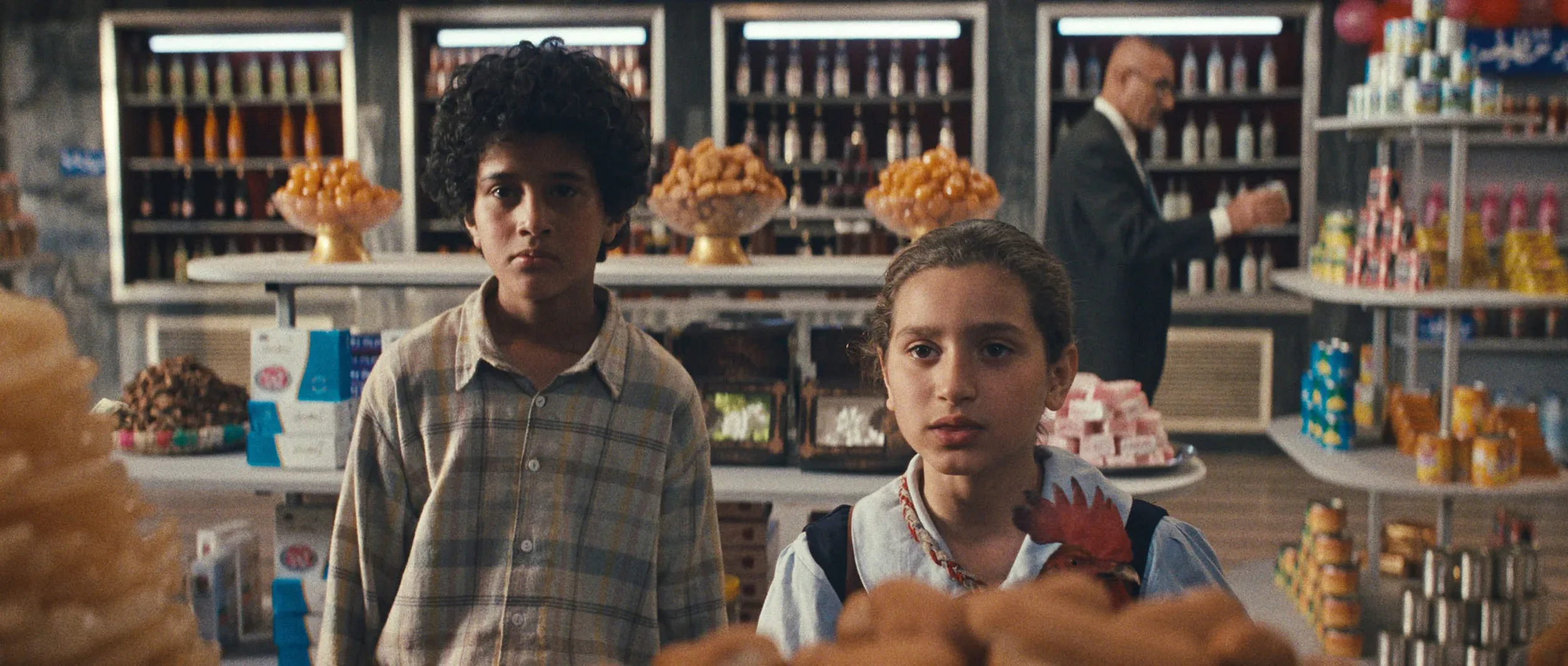
Not only that, but the story in The President’s Cake centers around children—in particular a 3rd-grade girl, Lamia (Baneen Ahmad Nayyef), whose name is drawn in class as the school’s chosen student to bake a cake for the president’s birthday. This is set in 1990, so the president was Saddam Hussein, the year he turned 53. The opening title cards inform us that the country is subject to UN-backed sanctions which significantly exacerbates the population’s poverty. Nevertheless, the entire country is required to celebrate his birthday every year, and a student in every school is chosen to bake a cake. We see Lamia’s teacher pass around a box into which all students must enter their name written on paper; one kid, who arrives late, must enter his name five times as punishment. One student’s name is drawn who has to clean the school; another must bring fruit; Lamia’s name is drawn for baking the cake.

The actual capability of each kid and their family evidently does not matter. When Lamia’s classmate and friend, Saeed (Sajad Mohamad Qasem), protests that he’ll be in the city with his father, the teacher notes that it is his “duty” to report anyone who disobeys, and mentions another family who was “dragged” for a similar infraction.

The President’s Cake is very impressively staged, as Lamia travels with Bibi (Waheed Thabet Khreibat), the grandmother who is taking care of her, to the city, ostensibly for ingredients. Lamia and Bibi live in a very rural area among marshes where Lamia commutes to school and back on what appear to be community canoes. Whether here or in the city they travel to, we see constant images of Saddam Hussein, in framed photos, paintings, even a wall mural pretty impressively rendered at the local school. The students are conditioned to shout things in their class like, “We sacrifice our blood and souls for you, Saddam!” In the city, the kids weave through both bazaars and crowded processions celebrating Hussein’s birthday.

Much of the film takes place in the city, where Lamia runs away after Bibi attempts to transfer custody of her to a friend, both due to her age and her inability to afford the cake ingredients. Lamia runs into Saeed, there pickpocketing with his disabled father. Both the marshes and the city are rendered in a way that feels deeply lived-in. In both environments the people are well aware of the state of the country but barely acknowledge it, just living their daily lives as they can. In one scene in the city, where the kids try everything from selling Lamia’s late father’s watch to offering labor to thievery in attempt to secure cake ingredients (eggs, flour, sugar, sugar, and baking powder), Lamia winds up in a coffee shop with a kind of jam band performing, the singer a young woman of some sophistication.

Lamia has a beloved rooster, which she has named Hindi, she’s brought with her. This seems like an unnecessary complication to a journey into the city, but I guess you can’t expect a 9-year-old to think logically. You might be right to worry about the fate of Hindi, who kind of has an adventure of his own. Lamia meets many people as she runs around the city, of course; sometimes they’re very kind and helpful, sometimes they’re clearly bad news. Sometimes you simply can’t tell.

There’s a few scenes in a hospital, and we meet people with injuries both their and elsewhere. There are casual references to being “bombed by the Americans.” Lamia and Saeed stick together for a while; they have conflict; they have resolution. All of this unfolds with the backdrop of everyday life in Iraq, with compulsory birthday celebrations happening and jets flying overhead. Lamia is too young to be concerned with geopolitics, or even war, until its effects come right up to her. All she knows is she wants to stay at home with her Bibi, and she needs ingredients to make a cake.

I don’t have a clue what life is like in Iraq today; it’s an entirely different universe from mine. But a film like The President’s Cake, even set 35 years ago, offers valuable insight into a culture and history that Americans were long encouraged to dismiss and dehumanize—to a large degree we still are. It doesn’t feel like writer-director Hasan Hadi made this film for that purpose, but rather to tell a deeply human story from the point of view of an average person who grew up in this historical context. It’s deeply affecting, and a truly impressive feature film debut.

The resilience of scrappy kids in The President’s Cake.

Overall: B+

ARCO

Directing: B+
Acting: B
Writing: B+
Cinematography: B+
Editing: B+
Animation: B+

I think I have finally pinpointed the primary reason I don’t care for anime. It’s the frame rate—or at least, the frame rate of moving objects. I prefer animation that looks more fluid, with a frame right high enough not to detect each individual frame with the naked eye. To be fair, anime covers a diverse array of visual styles, and some of it likely has higher frame rates; conversely, there are plenty of other animation styles that use lower frame rates. I don’t tend to care for those either. The key difference with a whole lot of anime is how it combines this style with stories that are either bonkers-weird or so culturally specific that I have no hope of understanding what’s going on.

You may be wondering why the hell I’m leading a review of a French animated feature that is definitively not anime with a paragraph about anime. Well, again: it’s the frame rate. We see our protagonist, the title character, picking fruit from a tree, and we see his arm in four positions as it raises up to the brand. Immediately I am thinking about how this was animated, rather than what the character is doing at this point in the story. I always find it a distraction.

At least this story is easy for me to follow. The closest this gets to bumping on cultural specificity is in the choice to release this film theatrically in the United States with American voice performances replacing the original French ones. This is the story of a preteen boy (Arco, voiced by Juliano Krue Valdi) who travels back in time from the year 2932 to 2075, and a trio of grown-men conspiracy theorists are sure they’ve discovered an alien in him, or some other equally mysterious entity, because of having seen a similar sight to Arco’s manner of arrival (with a streaking rainbow tail across the sky) twenty years earlier. In the American theatrical release, these men are voiced by Will Ferrell, Andy Samberg, and Flea. They have several lines that just come across as somewhere on the line between odd and stilted. It was the thing that most made me wish I could have just watched Arco in the original French with subtitles. There’s a sense that there’s some level of nuance lost in translation.

And they got some pretty big names for the America voice actors. In the year 2075, Arco meets a preteen girl named Iris, voiced by Romy Fay, who is fairly unknown—but, her parents, only ever seen in hologram form because they are stuck at their jobs in the city, are voiced by Mark Ruffalo, and Natalie Portman (who also co-produced the film). Arco’s mother is voiced by America Ferrera. Another major character is Iris’s live-in nanny robot, Mikki, whose voice is a blend of Ruffalo and Portman.

The distracting frame rate aside, the animation is drawn beautifully. When we meet Arco, we are in 2932, and he is jealous of his sister who is of age and thus can legally time-travel with their parents. It seems they travel back in time to bring back specimens of fauna they mean to replicate. They wear hoods that have a diamond embedded in the forehead as a tool for time travel, and rainbow colored hoods. This makes them look a little like futuristic clowns. Maybe it’s a French thing. In any case, they live on platforms that sit on the ends of giant white stilts somewhat like trees, among the clouds. Arco sneaks out in the middle of the night, snatches his sister’s clown outfit, and leaps off the edge of his family’s platform—you’d think they would have protective railings in the future but whatever. The momentum of falling is what triggers the time travel.

Arco wants nothing more than to travel back in time and see dinosaurs in person. I get it, that would be pretty awesome. But he makes a mistake and winds up in 2075, when houses are protected by automated glass domes from everything from gale force rainstorms to giant wildfires. Unlike in the distant future, the people of 2075 are integrated into a society with countless sorts of humanoid robots: the nannies are robots; all the teachers at school are robots; the police are robots; robots swarm to streets to work on repairs on damage from storms. I found myself amused by a pair of “insurance bots” that show up at Iris’s door with a very blue collar demeanor, and one of of them looks down at a tablet. Wouldn’t the robot already have the information from the tablet already stored in its memory? Younger audiences, of course, would not think to nitpick about this. Whew, good thing I’m here!

In any event, everywhere and any time between 2932 and 2075, every frame of Arco is beautiful to look at. Maybe that’s part of the point of the lower frame rate: it’s easier to soak in each frame. I still find it distracting. Lower frame rates are often a sort of cheat to save on production costs, and I can respect that. It doesn’t mean I have to have a preference for it.

Time travel stories are always tricky, and I am impressed when writers (in this case, Ugo Bienvenu, who also directed, and Félix de Givry) find a clever way to close the inevitable loop created by it. Arco does a pretty good job of it, both in terms of Iris’s attempts at helping Arco find his way back home, and of where Iris’s life leads after meeting him and how that influences the future. Having such a direct influence on how humanity lives 857 years later seems like a stretch, but I guess I’ll allow it.

It’s a fun premise, a fun story, and a compelling way to look at where society might be in 50 years versus centuries after that. Arco is the kind of movie that works very well as both surface entertainment and a treasure trove of themes when you dig deeper. I have mixed feelings about the three men who are chasing after the kids, who are quite easy to suspect as villains at first and then turn out to be something else. I can’t quite decide of that something else quite works, but if nothing else, even with the stilted dialog as performed in English, they are entertaining. Such is the case with Arco overall.

I guess that’s one way to look ahead.

Overall: B+

THE SECRET AGENT

Directing: B
Acting: B+
Writing: B
Cinematography: B
Editing: B-

Those Brazilians, man. They sure know how to convince the world that their movie is significant, worthy of attention, and worthy of awards. The did it with I’m Still Here—a much better film, in my opinion—last year, and they’re doing it again with The Secret Agent this year. The thing is, I’m not fully convinced. Sure, this is a competently made film, but it also takes some truly bizarre turns, and it overall strikes me as compelling but flawed.

More importantly, The Secret Agent clocks in at 161 minutes, and I cannot see any reason why that was necessary. There is a climactic sequence that is genuinely exciting, the kind of crime thriller stuff you love to see in the cinema—but it happens after a solid two hours of languid plotting. I hesitate to say it was worth the wait.

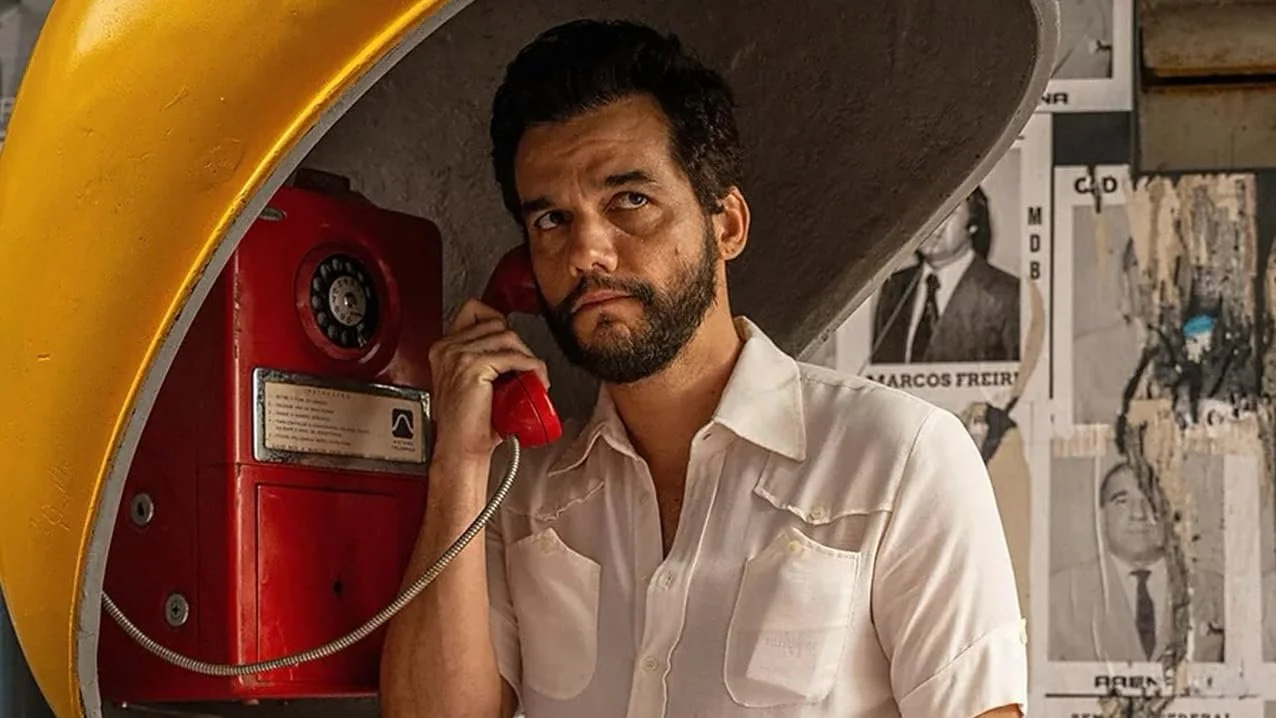
I don’t even fully understand the title. How is Armondo (Wagner Moura) an “agent,” exactly? Does going into hiding from government officials who have put out a hit on youn make you a “secret agent”? This title suggests a spy thriller, but Armondo doesn’t spend any time spying. Granted, he does assume different identities, and depending on the circumstance he is known as Fernando. (To muck things up even further, Armondo also has a young son, Fernando, who we later see in flash-forward to present day, and the adult Fernando is also played by Moura.)

Don’t get me wrong, I actually liked The Secret Agent. I just have a lot of nitpicks, and enough of them to leave me mystified as to the idea that was one of the year’s best films. For example: there’s a single tonal shift that is so wild a departure from the seriousness of the rest of the film that I found it to be a true “What the fuck?” moment. It has to do with a running subplot about a severed human leg, first discovered swallowed inside a shark, and later snatched by local law enforcement and dumped into a river. We cut back to our regular programming for a while, and then, seemingly out of nowhere, the narrative jumps to the leg washed up on a riverbank, and it suddenly twitches on its own. It’s alive! Suddenly we’re in a park with a bunch of late-night public sex going on, both straight and gay. In one of the latter cases, a guy on his knees giving head is completely naked—like, what? did he just walk there from home without his clothes? or did he completely strip and toss his clothes aside in the park just to give head? This really isn’t how these things go down. Anyway, this severed leg with a bloody stump at about mid-thigh just goes on the rampage, hurling itself through the air to kick all the horny park patrons in the face, leaving them screaming and bloody.

I was stupefied. To be fair, I suppose, this sequence jumps to the group of people being protected in secret, Armando among them, reading this account from the local newspaper, cracking up at how the story is written as though this really happened. It turning out to be a sort of fantasy sequence notwithstanding, it’s a whiplash-inducing shift in tone.

There’s a lot of the rest of The Secret Agent that I quite liked; I might even be more inclined to think of it as a Great Movie if it simply cut out that attack-leg sequence altogether, and cut the rest of it to maybe half an hour shorter. The acting is solid, especially Wagner Moura himself, as a man achieving an outward calm while clearly often being deeply frightened. In the opening sequence, which I would argue is itself overlong, Armondo is stopping for gas after days of travel, and there’s a random dead body covered by cardboard in the dry dirt nearby. Armondo is clearly unsettled by this, but he also needs gas. This effectively sets the stage for what it’s like for him to navigate his native country of Brazil in 1977, during their military dictatorship.

We then spend a lot of time meeting a lot of characters, including a duo of hired assassins, stepfather and stepson Augusto and Bobbi, played by Roney Villela and Gabriel Leone, respectively. This is most notable to me only in that I hope to see more of Gabriel Leone because holy hell is he gorgeous. I guess it doesn’t hurt that he’s also a pretty good actor. On the flip side, there is also a cat with two faces that hangs out in the building where the people being sheltered are staying, and while I get the symbolism of duality, it’s a pretty unsettling sight.

There are also the local police chief in Recife, the northernmost major city in Brazil (it’s near the easternmost point of South America), and the chief’s henchmen; the guy who hires Armando to pretend to be a desk worker when a sham of a deposition is held in a space only made up to be the police station; several of the other workers in this space that is also an archive office; the Jewish holocaust survivor the chief harasses; Armando’s fellow political refugees also under protection; the government officials who hire the hitmen; and the father of Armando’s late wife who runs a local cinema—too many characters to name. I suppose I can credit the slow plotting for how easy it actually is to keep all of these characters straight.

Mind you, I am fully open to the idea that The Secret Agent really is some masterpiece and it’s just not for me, because I don’t get it, and I am unable to—because I am not Brazilian, and the only history I glean from that country is through movies like this. Even the wild leg sequence could be explained as an illustration of the ridiculous ways the media of the time was used to obfuscate otherwise blatant corruption. I just found some of the depiction of queerness in it to be a bit misinformed, and the narrative contextualization of the entire sequence to be inadequate. But, that’s just me. I feel confident that the average movie watcher will be bored to tears by this film, and plenty of film snobs will hail it as a masterpiece. I don’t quite fall into either camp, in that I clearly have a lot of notes, but I’m not sorry I saw it.

I guess the secret is exactly what kind of agent he is.

Overall: B

NO OTHER CHOICE

Directing: B+
Acting: B+
Writing: B+
Cinematography: A-
Editing: B+

No Other Choice is so much of a piece with the 2019 Best Picture winner Parasite, the comparisons are inevitable. It would seem that darkly comic examinations of South Korean capitalism—most of which can be applied globally—are part of an evergreen idea.

I’m not sure which of the two movies is objectively “better,” but Parasite certainly has the gigantic advantage of having come first. Setting aside its Best Picture win and the fact that No Other Choice has no such hopes, had No Other Choice been released in 2019 and Parasite released now, we might very well be having this exact same conversation, just in reverse.

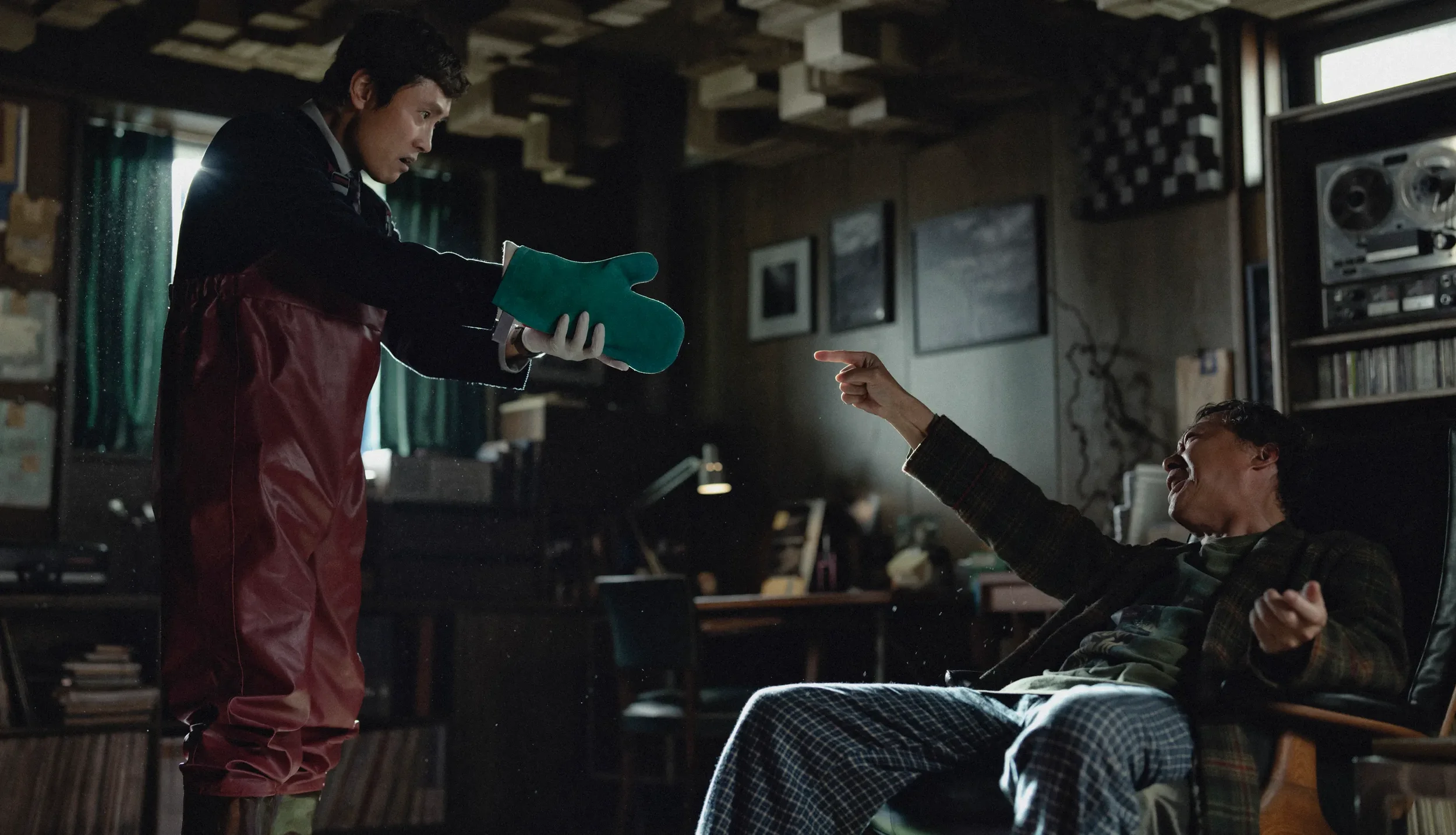
It could be said that No Other Choice is more cynical. Multiple murders happen in this movie, and ultimately without consequence. It’s all in service of getting the good job: Man-su (a fantastic Lee Byung-hun) has been laid off after 25 years working at a specialty paper manufacturer, and takes increasingly desperate measures to pull ahead of three competitors for a similar job at another company.

What I love about these measures is how unpredictable they are. Just like Bong Joon Ho, famed Korean filmmaker Park Chan-wook (who also co-wrote) has a very specific sensibility to his storytelling, the kind of thing it’s easy to see being ruined by any attempt at an American remake. And before any of the real action starts, we get to know Man-su’s family: a wife, Mi-ri (Son Ye-jin), who proves both refreshingly complex and surprisingly loyal; a teenage stepson he’s been raising with her since he was 2, Si-one (Woo Seung Kim); and a young cello prodigy daughter who doesn’t speak much, Ri-one (So Yul Choi). They even have two dogs, named Si-two and Ri-two—hence the “ones” of the children’s names.

This is a family of very fully realized characters, who are all very used to the comforts of the life Man-su’s career has brought them. Man-su is convinced he’ll have another job in three months, and 13 months later, he’s working at a Costco-like warehouse. There’s a very odd scene in which he evidently quits that job in order to chase a mid-afternoon opportunity, and he’s forced to strip out of his work jumpsuit and stand on the loading dock in his tank top and boxer shorts. Unless there’s something I am missing about Korean culture, that seemed a little over the top.

Granted, Man-su is enagaged in multiple attempts at murder not long after this, so I’m not sure how fair it is to judge this film for being “over the top.” There’s a lot of humor at play here, and, also much like Parasite, it doesn’t come on strong until pretty far into the movie—particularly a tussle between Man-su, his first competitor applicant, and that man’s frustrated wife, all tumbling comically over each other in their living room and wrestling for sole control of a pistol. A key difference is that Parasite had delightful plot twists no one could see coming; No Other Choice, by contrast, leans a bit more into hijinks.

That said, No Other Choice makes clear that there is some irony in its title: Man-su, and multiple others, have plenty more choices than they will admit to, even as they resort to what seem to be life-or-death measures—until that’s actually what they become. There’s a scene where Man-su verbally berates Goo Beom-mo (Lee Sung-min), his first target, for his stubbornness in refusing to look for reasonable alternatives, and he could just as well be speaking to himself.

That first attempt goes to some wild places, involving everything from surprise infidelity to a snake that may or may not be poisonous. But whether it’s Goo Beom-mo, or Ko Si-jo (Cha Seung-won), another laid-off worker now reduced to selling shoes, or social media influencer Choi Seon-chul (Park Hee-soon), all of Man-su’s targets are presented with full stories of their own, sometimes deeply flawed but always easy to empathize with in their own situations. This is perhaps part of the point: the job market is a cutthroat world, and sometimes you have to turn into a sociopath to get ahead.

There are some technical things that really make No Other Choice stand out, though, particularly some beautiful and clever cinematography. There’s a memorable shot of Man-su parking his car on a street surrounded by fall foliage, and another incredible shot of people’s reflections in an iPad screen while the screen pages are being slid to the side with someone’s finger. This makes for a movie that is often as fun just to look at as it is to engage with.

In years past, No Other Choice would be about a downtrodden, unemployed guy we can’t help but root for. Man-su is a peculiar character in that you are absolutely compelled by him, but whether you’re rooting for him gets much more complicated as the story unfolds. This is a family who, by the end, we slowly realize are living their lives as though the ends justify the means. The means is often quite entertaining to us, but deep down it’s a cynical reflection of what unchecked capitalism actually does to people.

I mean, there are lots of choices here.

Overall: B+

RENTAL FAMILY

Directing: B-
Acting: B
Writing: B-
Cinematography: B
Editing: B-

There’s something about Brandan Fraser’s performance in Rental Family, a kind of forced “aw-shucks” quality I found slightly off putting. He also keeps doing this thing with his mouth, where he sort of scrunches his lips to one side. To be fair, it’s very different from anything he’s done in other roles, but all I could think about was how he was simply making specific acting choices for this character. But isn’t that the kicker—that I should not be conscious of acting choices? I should readily suspend disbelief, and accept Phillip Vanderploeg as an individual.

I feel bad dumping on Brendan Fraser like this; I do like him as an actor, generally speaking—his performance in The Whale was incredible, and was the only thing that kept me from dismissing that wildly problematic film completely. Considering these respective performances, I suppose the next step is toward the director, in this case a Japanese director named Hikari, who apparently goes professionally by one name, like Madonna or Beyoncé. She most recently directed three episodes of the excellent Netflix series Beef, and has one other feature film on her resume, about a young Japanese woman with cerebral palsy called 37 Seconds and which ironically had a runtime of 6,900 seconds (115 minutes). Anyway, I can only imagine that either Hikari was happy with the performance Brendan Fraser gave her, or this was what she coaxed out of him. Either way, I found it a little cloying.

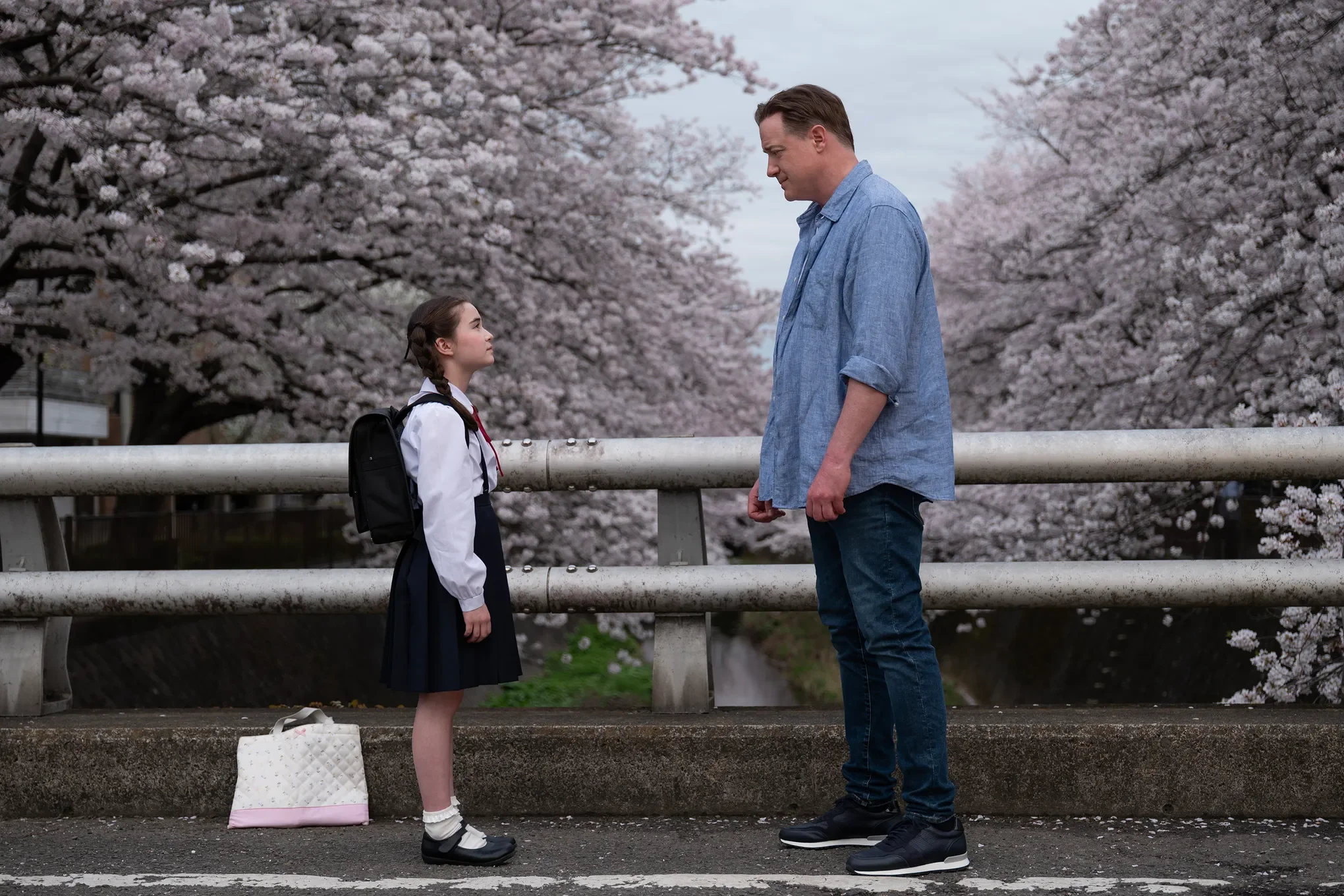
The performances of everyone else in the cast ranges between pretty good to great—the latter applying to the very impressive 11-year-old Shannon Mahina Gorman, whose very presence improved Rental Family any time she was onscreen. Finding a child actor who is both talented and natural is a difficult feat. Gorman is biracial, as is the young character she plays, Mia, whose single mother hires the “Rental Family” agency to provide a stand-in American dad for her. Mia’s mom is trying to get her accepted into a good school, which she believes previously rejected her because of the absent dad. Enter Phillip, here playing another person as provided by the Rental Family agency.

Rental Family follows dual plot threads, one where Phillip bonds with Mia, and another where Phillip pretends to be a journalist interviewing an elderly actor named Kikuo (Akira Emote) who is afraid the country is forgetting his life’s work—his daughter hires the agency in an effort to make him feel better. The story moves into these other two plot threads after we see Phillip’s first job, as a hired groom at a wedding, staged for the benefit of the bride’s parents. This sequence ends with a particular reveal that I won’t spoil, except that it seems to serve as a justification for the agency’s existence, and is fairly moving.

But, thanks to an occasionally muddled script, cowritten by Hikari and American writer and executive producer Stephen Blahut, there are times when even Rental Family seems ambivalent about a service like this, which is apparently quite prevalent in Japan. Is Hikari making a statement, or a judgment, about them? I can’t quite tell. This film seems to support some of their services, such as what is revealed to be the reason for the wedding, but not some other services, such as “apology services” where cheating husbands hire a fake mistress to apologize to their wives. Do none of these husbands think of apologizing themselves?

Multiple times in Rental Family, a character will comment on how people outside of Japanese culture will never fully understand it. This is coincidentally in keeping with my experience of this film, which I could never fully connect with. I wanted more dimension to the characters, and particularly to Phillip, who spends far more time onscreen pretending to be someone he’s not. The only thing we know about why this “big American guy” has been living in Japan for the past seven years is that a widely seen toothpaste commercial was what brought him there to begin with. Do actors really move to Japan just for one commercial gig? I want to know more about his family back home, and why he had such an apparently absent dad. But, evidently the only reason we know even that much is so he can express reservations about playing a parent himself.

We lean early on that Phillip is lonely in Japan, no friends to speak of, no romantic partner, just a woman who is evidently a sex worker—also a very undeveloped character, although I can appreciate that at least in this movie she’s much more than just a sex object, a thoughtful woman who also provides Phillip companionship. Really, all the characters around Phillip are far more interesting than he is, not just because they are all have a fair amount more dimension to them, but because Phillip’s only mode seems to be uncomfortable awkwardness.

There’s nothing egregiously wrong with Rental Family, I just found it somewhat lacking. It’s a blandly pleasant entertainment, and I tend to want more than that. Others may locate more insight in it than I did. It won’t elicit much passion: it’s fine for what it is, and it won’t be long remembered.

I kind of wish the movie were about her instead.

Overall: B-

SISU: ROAD TO REVENGE

Directing: B
Acting: B-
Writing: B-
Cinematography: B+
Editing: B+
Special Effects: B+

Sisu: Road to Revenge opens so similarly to the original 2022 Finnish film Sisu that, for a brief moment, I thought I had misunderstood something and somehow found myself at a rerelease of that film. The first thing you see is a title card offering the definition of the word Sisu: “a Finnish word that cannot be translated. It means a white-knuckled form of courage and unimaginable determination. Sisu manifests itself when all hope is lost.” And in both films, this is followed by voiceover narration as we see an animated map of Europe—in the case of Sisu, we learn it is 1944 as the Second World War is coming to an end; in Sisu: Road to Revenge, it is two years later, 1946, shortly after the end of the war. We learn of the land area of Finland that was ceded to the Soviet Union, forcing nearly half a million Finnish people to relocate—and that this was the homeland of our hero, Aatami (Jorma Tommila).

Once these introductory scenes are out of the way, the two films then move forward in fairly different ways. In Sisu, it began with quiet serenity while Aatami prospects for gold, ultimately interrupted with approaching Nazi carnage. In Road to Revenge, we see Aatami driving a huge truck across the border, where he finds the home of his family who was murdered by a Soviet Red Army officer. He commences with dismantling the lumber of the house, marking the pieces as needed for reassembly, and stacks it on the bed of the aforementioned huge truck.

You could say there is a sort of serenity to this early sequence as well, except that writer-director Jalmari Helander, who wrote and directed both of these movies, moves through it much more quickly. And, just as in the first film, sequences are divided up into “chapters,” most of which last no longer than a single set piece.

And here is where I really get to the point: what surprises me most about Sisu: Road to Revenge is how it’s gotten a more positive response, from both critics and audiences, than the first film. The best I can guess is that people find the action sequences, and the delightfully inventive violence that defines both films, to be even more exciting than before. For me, though, there’s something about the time the first film takes before shifting gears, and the specific tone from an international perspective that gave it a novelty that by definition cannot exist with a sequel.

There’s a bit of an irony in how I would call this a rare instance of it being actually advisable to watch the original film right before going right into watching the sequel. Because even though the films are set two years apart, they very much feel like the same movie. Helander reportedly was very deliberate in keeping the run times of these films at a tight ninety minutes because he is “not a fan of 3-hour epics” (according to IMDb.com). And yet, you could easily watch these two films back to back for a solid three hours and feel like you’re watching a single, epic story of wildly implausible but deeply entertaining revenge violence.

Indeed, in Road to Revenge, we do get a villain as the character who murdered Aatami’s family—Red Army officer Yeagor Dragunov, played by American actor Stephen Lang. This actor is the guy perhaps most notably recognized as the primary villain in both Avatar and Avatar: The Way of Water, except in those movies he’s super jacked, and in Road to Revenge, his character having just been released from a prison in Siberia, he’s pretty scrawny—almost emaciated. But, the Soviets are eager to dispatch this mysterious man who has killed hundreds of men, and so they release Dragunov to “clean up the mess he made.” This leads to an inevitable showdown.

Both Sisu movies make the curious choice of shooting nearly all the dialogue in English—evidently as a means of broadening the audience potential of a film out of Finland. Lang gets by far the most lines in Road to Revenge, presumably meant to be in Russian but performed, evidently for our sake, in English. A lot of his lines are super contrived or outright stupid, to such an extent that they would have played better in Russian with English subtitles. As an evident nod of respect to Helander’s homeland, any dialogue by Finnish characters is indeed performed in Finnish with English subtitles. In Road to Revenge, this only occurs with two lines at the end of the film. Even then, Aatami himself says nothing, as a defining characteristic of both of these films is that he is a man of few words. He says only a couple of lines at the end of the original Sisu; he makes it through the entirety of Road to Revenge without saying anything at all.

Mind you, it’s pretty easy to say that if you liked Sisu, you will certainly like Sisu: Road to Revenge—especially as the latter gets to the action a lot more swiftly, as is par for the course with sequels like this. There’s a pretty great chase sequence with Aatami and several armored men on motorcycles that is basically Indiana Jones meets Mad Max. As always, Aatami sustains a great deal of injury, but a big part of the point of these films is how the blind desire for vengeance is what keeps him alive even in the direst of circumstances, even as he regularly achieves the humanly impossible, let alone the implausible.

Sisu is basically Finland’s version of a superhero franchise, albeit one that feels as though it was filtered through the sensibility of Quentin Tarantino. There are moments in Sisu that are quite emotional, though, and it never lets us forget that Aatami is still grieving the lost of his entire family at the hands of the enemy. This man does not see Nazis or Soviets as individuals, but as parts of a collective entity who wronged him. This makes it easy to root for his often gruesome killing of soldier after soldier. This happens in Road to Revenge, but of course, all as part of his path to Dragonov. This culminates in a pretty fun sequence of Aatami hacking and gunning his way through cars of men on a train headed back to Siberia.

A quick note on the special effects: some of it is very impressive in this movie, particularly wide shots of fighter jets attempting to gun down Aatami in his truck full of lumber. Other times, it’s very obvious CGI, such as the wide shots of the aforementioned train traveling through the night. At least it’s never overtly bad, and its use only ever serves the story, such as it is. This is a movie made to satisfy viewer bloodlust, and on that level, it delivers with a clever hand.

You missed a spot!

Overall: B

SENTIMENTAL VALUE

Directing: A-
Acting: A
Writing: A-
Cinematography: A-
Editing: A-

Anyone with a thing for juicy family dramas should look no further than Sentimental Value, Norwegian director Joachim Trier’s follow-up to his similarly excellent The Worst Person in the World (2021). The person he cast in the starring role is also the same in both films: the wonderful Renate Reinsve, here playing Nora Borg, an accomplished stage actress in Oslo, where she lives in a home that has been in her family for generations.

If I had any minor nitpick about Sentimental Value, it would be how no one ever talks about the hugeness of this house, which appears to have three stories and an unspecified but certainly large number of rooms. The generational history is discussed as far back as Nora’s great great grandparents, but I don’t recall any family iteration being larger than a family of four: two parents and two kids. Clearly more recent generations aquired the house through inheritance; maybe earlier generations actually made it a multi-generational home? I kept wondering how the hell any of them kept it clean. None of these generations are shown with a housekeeper.

Surely it would make sense that such a house would be easier to afford in the era of World War II—today, in the United States at least, this house would have been converted into an apartment complex long ago. Granted, this is Norway, and a lot of things work differently there—although the simple tenets of capitalism infect every corner of the globe. And, to be sure: this house figures prominently in the plot of Sentimental Value, a beautiful repository for collective memory and generational trauma, from Nora’s grandmother’s Nazi imprisonment and subsequent suicide inside the house, to Nora and her sister Agnes (Inga Ibsdotter Lilleaas, also excellent) witnessing the volatility of their parents’ marriage until their father, Gustav (Stellan Skarsgård), leaves and spends the better part of the rest of their lives estranged from them.

Sentimental Value opens shortly after the death of Nora and Agnes’s mother, a character we really never get to know. This is about their relationship with their father, a once-famous director who has not made a film in 15 years. But, he has now written an incredible script, with the lead part tailor made for Nora, who wants nothing to do with it. Searching for other options, Gustav turns to an American actress he meets at a local film festival: Rachel Kemp, played by Elle Fanning in a really tricky part that she nails. Rachel is curious about the deep sadness of the suicidal character she’s playing, and Gustave has to tell her more than once that it’s not about his mother. Meanwhile, he asks Rachel to dye her hair the same color as Nora. (And incidentally, Elle Fanning and Renate Reinsve bear an uncanny resemblance. If not for the different accents, they could more believably play sisters than the sisters we actually see onscreen here.)

What Gustav has written is highly fictionalized but still has clear similarities to his own life and family—and this is where we return, yet again, to the house. Gustav wants to shoot the film in the family home. He also wants to use his young grandson, Erik (Øyvind Hesjedal Loven, the only cast member who is clearly not a practiced actor, just like the character), in the production—just like he once did Agnes, in a previous World War II-era film. Agnes was a great screen presence at the time, but did not pursue acting as a career as Nora did. Gustav, ever the undependable dad, complains of his dislike for live theater, and so never comes to Nora’s plays.

All of this comes together in a plot that is complex but never difficult to follow, and perhaps may even be a bit slowly paced for some viewers. It’s worth noting that although this is a family drama about two sisters with deep resentment toward their father, there are no histrionics here, no scene made for an Oscar clip. Where other movies of this sort go for familial cruelty, this one leans more heavily into a kind of benign neglect. There’s something about Stellan Skarsgård’s performance, though, that still elicits empathy. Few people can convey subtly tortured interiority like Stellan Skarsgård.

Gustav is a man who can’t help who he is, and doesn’t really know how to change—certainly not now at the age of 70. But, over time he uses this new script of his to convey how he has an uncanny understanding of Nora in particular, the daughter he wrote it for. In the end, it is through their art that they finally find a way to connect, and this is the subtle but very sweet note on which the story ends. Sentimental Value takes a sort of scenic route through its themes, never exactly a thrill of an experience but one with a finesse that stays with you.

A father-daughter relationship not quite like others you’ve seen.

Overall: A-

IT WAS JUST AN ACCIDENT

Directing: A-
Acting: B+
Writing: A
Cinematography: B
Editing: A

I wonder if I’m over here on Weirdo Island, thinking about Alfred Hitchcock’s Psycho while watching Jafar Panahi’s It Was Just an Accident? There is almost no thematic connection between these two films, although Psycho features a serial killer and It Was Just an Accident features a near-murder. What the two films have in common are their unusual narrative structure, particularly an opening, extended sequence leading us to think one person is the main character, only to find out it’s actually another person. Indeed, the first character is even attacked by the second.

We are first introduced to a nuclear family, driving through the night: a seemingly loving husband and father (Ebrahim Azizi) with his wife in the passenger seat and pop music-loving young daughter in the back seat. The cinematography is fascinating here, as it appears to be a simple mounting of the camera on the dashboard, and a lot happens in a single shot—including other cars passing, in one case with several barking dogs chasing in the other direction. Within moments, we hear the bump of an animal being hit, and the man stops the car, gets out, and investigates. The camera never shows the animal—this technique is repeated later in the film in a pointed way—but we do see bits of the man’s shadow, a view of city lights on the hills in the distance behind him, as he drags the animal out of the street. He returns to the car, and the little girl’s chipper attitude has soured. “You killed it,” she says. And the mother tries to console her. It was just an accident.

Shortly thereafter, this family’s car breaks down, and the man asks for help from men in a nearby home. This is where the perspective suddenly shifts, to another man, Vahid (Vahid Mobasseri), who is hiding on the second level of the home, out of sight. Panache’s camera only ever sticks with Vahid for the rest of the film, and it’s quite a lot time before we have any idea why. This includes Vahid following the man back to his home, and following him the next day to the place his car is towed to for repair. In his own van, Vahid creeps up on him in the street, opens the passenger door hard against him, and then knocks him out with a shovel.

All of this is essentially the first act. What follows is an unsettling sort of road trip story, Vahid eventually gathering several more characters: Shiva (Mariam Afshari), a woman working as a wedding photographer; Goli and Ali (Hadis Pakbaten and Majid Panahi), the engaged couple getting their pictures taken; and Hamid (Mohamad Ali Elyashmehr), Shiva’s former partner. what is gradually revealed is that nearly all of these people, with the one exception of Ali, were once arrested by the Iranian regime, and tortured for months by a man with an identifiable limp due to a prosthetic leg named Eghbal—and they are all varying levels of convinced that the man we met at the start of the film is this man.

It may seem that I have revealed a lot of detail about this film, but believe it or not, that is all mostly the setup. It does take a good deal of time to get through, but it’s how we get here: the way Panahi, who also wrote the script, explores the psychological effects of a deeply oppressive and authoritarian regime. The man who might be Eghbal easily plants a seed of doubt in Vahid’s mind as to whether he’s got the right guy, which is why he goes on an odyssey of sorts, gathering acquaintances who had also been arrested in the hopes that they can confirm the man’s identity, even though they were all blindfolded the entire time they were held captive and never actually saw him. They heard him, they felt him, they smelled him. For some, the familiarity they find is not quite convincing enough. For others, it’s triggering to the point of instantaneous rage. For all of them, it’s maddening.

Eventually all of them are traveling the city in Vahid’s van, maybe-Eghbal’s drugged, bound and unconscious body locked in a trunk that is curiously the perfect size for a grown man. There’s a number of exterior, urban shots of this cast with said van, and I often wondered how this film was made. Much like the similarly excellent The Seed of the Sacred Fig, directed and written by Mohammad Rasoulof and opened earlier this year, this was filmed in secret in Iran. Indeed, Panahi and Rasoulof are just two of many artists who have been arrested in the past for speaking out against Iran’s authoritarian regime.

And the roving band of characters in It Was Just an Accident have many of their own conversations about it. They talk and they argue, they debate and they yell—often about the tension between desire for vengeance and what it means to become just as violent and cruel as your oppressors. Many of their exchanges bring to mind parallel points of view here at home in the United States. This is less a reflection of cross-cultural commentary than of universal tensions among different societies. We eventually find nearly all these characters pushed to the emotional brink in one way or another, and It Was Just an Accident proves sneakily unsettling in the end. Panahi often holds a shot for a very long time, always with purpose, and especially in the very last shot of the film, which calls into question whether Vahid did the right thing in the end, or indeed what the point of any of it was. This makes It Was Just an Accident sound pretty bleak, and I suppose it is. It also paints a vivid picture of what authoritarianism does to the regular people subjected to it.

Overall: A-

JANE AUSTEN WRECKED MY LIFE

Directing: B-
Acting: B
Writing: B-
Cinematography: B
Editing: B+

Who decided on this English translation of Jane Austen a gâché ma vie, I wonder? That’s the original, French title of this film, and when you ask Google to translate, it comes up with Jane Austen Ruined My Life. That’s a better title, no? Am I wrong here? If you remove every word except gâché, however, it translates as spoiled. Should the title have been Jane Austen Spoiled My Life? I should note that I do not speak French at all, and for all I know, gâché is closer colloquially to wrecked in American English than to ruined. I have no idea! I’m really glad we had this talk, I think we really accomplished something here today.

Did writer-director Laura Piani, though? That’s the real question here, because I feel a little ambivalent about this film. It seems to have genuinely charmed a lot of critics. Right now I am kind of leaning toward the title Jane Austen Muted My Evening.

I mean: it’s fine. I have no major complaints. Well, except that I could get little sense of Piani’s direction, and I often could not tell if the characters here lacked any naturalism or if it’s just a vibe of French sensibility that is foreign to me. The characters interact with each other with an unusually comfortable familiarity, which ironically radiated off the screen to me as awkward.

Here’s a burning question. Are Parisians big on book stores? The one where Agathe (Camille Rutherford) works appears to be thriving. Apparently, this is one of the things in Jane Austen Wrecked My Life that is real: the French love books. In fact, the bookstore where Agathe works, Shakespeare and Company, is very real—an English-language bookstore that has been open in Paris since 1951. I wish I had known that while I was actually watching the movie. I’d have paid more attention during the many book store scenes. I remain a little annoyed by the seemingly haphazard way they put books on the shelves. Is there no order in this store?

Agathe works with her best friend, Félix (Pablo Pauly), who indulges Agathe in her obsession with Jane Austen novels. She is also a writer, an insecure one who writers “cheap romances” (as one writing teacher puts it), but Félix submitted her unfinished chapters to the Jane Austen residency without telling her. After much resistance, Félix convinces her to go. This place is located in the middle of the woods somewhere in England, and the sweet old lady running the place speaks French fluently—as does her grown son she send to pick up Agathe, Oliver (Charlie Anson). These are British actors and characters, and Agathe of course speaks English fluently, so Jane Austen Wrecked My Life has dialogue pretty evenly mixed between the two languages.

Here we get to the Great Question: should Agathe be with Félix, or with Oliver? The story here plays out in a way transparently meant to mirror Elizabeth Bennet and Fitzwilliam Darcy from Pride and Prejudice. Ironically, when Agathe and Félix first meet, he has a prejudice against Austen’s work, calling it “overrated.” We already know Agathe has deep pride in Austen’s work.

It’s all pleasant enough, although Agathe longs for the “poetic spark” of novels that she finds lacking in reality—and most of the time, I kind of felt the same way about this movie. The one exception, and a notable one at that, is when the Jane Austen Residency puts on a ball, with everyone wearing the clothing of Austen’s era, and doing the same English Country dancing. At this point, Félix has surprised Agathe with a visit, the day after she actually has discovered a spark with Oliver, and here she moves from dancing with one, to dancing to the other, and back. This sequence is dazzling in its execution, the moment when Jane Austen Wrecked My Life actually sidesteps into the realm of movie magic. I rather wish more of the rest of the movie were like it.

As it is, Jane Austen Wrecked My Life is sprinkled with subtle charms, including Oliver’s dad evidently slipping into the kind of giddy dementia that has him gardening with nothing on from the waist down. I’ll probably forget this movie entirely within a week, as it blossoms in moments but utterly wilts in the shadow of the work that inspired it, but it’s still a nice memory for the short time it will last.

That moment when magic happens.

Overall: B