
CLUB KID
Directing: A-
Acting: A-
Writing: A-
Cinematography: A-
Editing: A
Here’s the question that is impossible for me to answer: would I love Club Kid so much if I weren’t queer myself? I have encountered a bit of discourse about this film that includes criticism that makes some sense, although there are counterarguments to all of it. It’s easy to see how open-minded straight people can be enchanted by this film’s ample charms, and overlook some things about it that run the gamut from stereotypical to oversimplified. And yet, Club Kid spoke to me deeply—even though I have never been even remotely part of the club scene it depicts, nor am I a parent. All I really have in common with Peter (Jordan Firstman, in a truly stunning feature film debut as writer-director) is that I’m gay, and have also been embedded in a deeply queer community with a lot of trans people.
Peter’s world is one of a self-employed party promoter constantly surrounded by drugs, of countless types—most of which I know nothing about. Many queer films take a completely nonjudgmental approach to recreational drug use, and Club Kid is no exception. The key difference here is that this is a film that understands it is no environment for a 10-year-old boy.
Enter Arlo, the son Peter never knew he had, played by Reggie Absolom, a kid who seems to have come straight out of Adorableness Central Casting. This seems to be a bit of a thing these days, movies featuring a lead part for a kid whose casting is a little too perfect. This is no dig on Absolom, though; he can’t help how adorable he is, and he does a good job. When he enters the picture, the vibe shifts quickly and dramatically; this is after a cold open in which we see how and where Arlo is conceived, in a dark room and in a wildly drug-induced stupor. I will see I have never seen a sex scene in a club dark room so beautifully shot; credit there goes to cinematographer Adam Newport-Berra (who also gorgeously shot The Last Black Man in San Francisco).
“A decade or so later,” Arlo is plopped in Peter’s figurative lap by his mother’s close friend, having promised she would take the kid to his dad if anything ever happened to her—and something did. It’s immediately clear that this friend, and Arlo’s mother herself, were no more stable or particularly responsible than Peter himself, and she drops Arlo off with Peter in New York before fleeing back to the UK, where Arlo has thus far been growing up. This distance of origins inevitably brings its own complications.
In the meantime, Peter takes to Arlo, and Arlo to Peter, in ways that are both irresistibly sweet and surprisingly sincere, and this is precisely what makes Club Kid such a delight—as it simultaneously presents a deeply queer, built-in support network for both of them, while gradually illustrating that the environment is still not quite appropriate for Arlo. A group of friends with untamed, queer energy basically crashes Peter’s apartment at one point, and although they immediately love Arlo and he is immediately taken with them, whether barging in like this on a kid in a brand new environment is appropriate is perhaps up for debate.
I have seen the criticism that Arlo, as a character, is distractingly too “good” a kid to be plausible, and exists only to inject the story with sweetness. There’s a lot of truth to this, actually, but it’s also not entirely fair. We learn things about both Arlo’s mother and his father that indicate some obvious trauma, and we get a glimpse of how it has affected Arlo in a park scene in which he is found fighting with another boy. Firstman might have done well to explore this a little further, but the story still moves from there to an eventual conclusion that is both logical and heartbreaking.
Firstman, for his part, has a natural onscreen charisma, and when directors so successfully direct themselves, it is always deeply impressive. This is a guy with undeniable talent, who has made a film that can shift from genuinely hilarious to tear jerker—seriously, make sure you have tissue with you for this one. I will go ahead and let you know, however, that this does not end tragically—it’s not that kind of movie. This is about finding a path that is best for everyone. And that path for you is seeing this movie, which is perhaps the most heartwarming story ever told with so much drug use in it. Club Kid will take you from party chaos to warm fuzzies in just two hours.
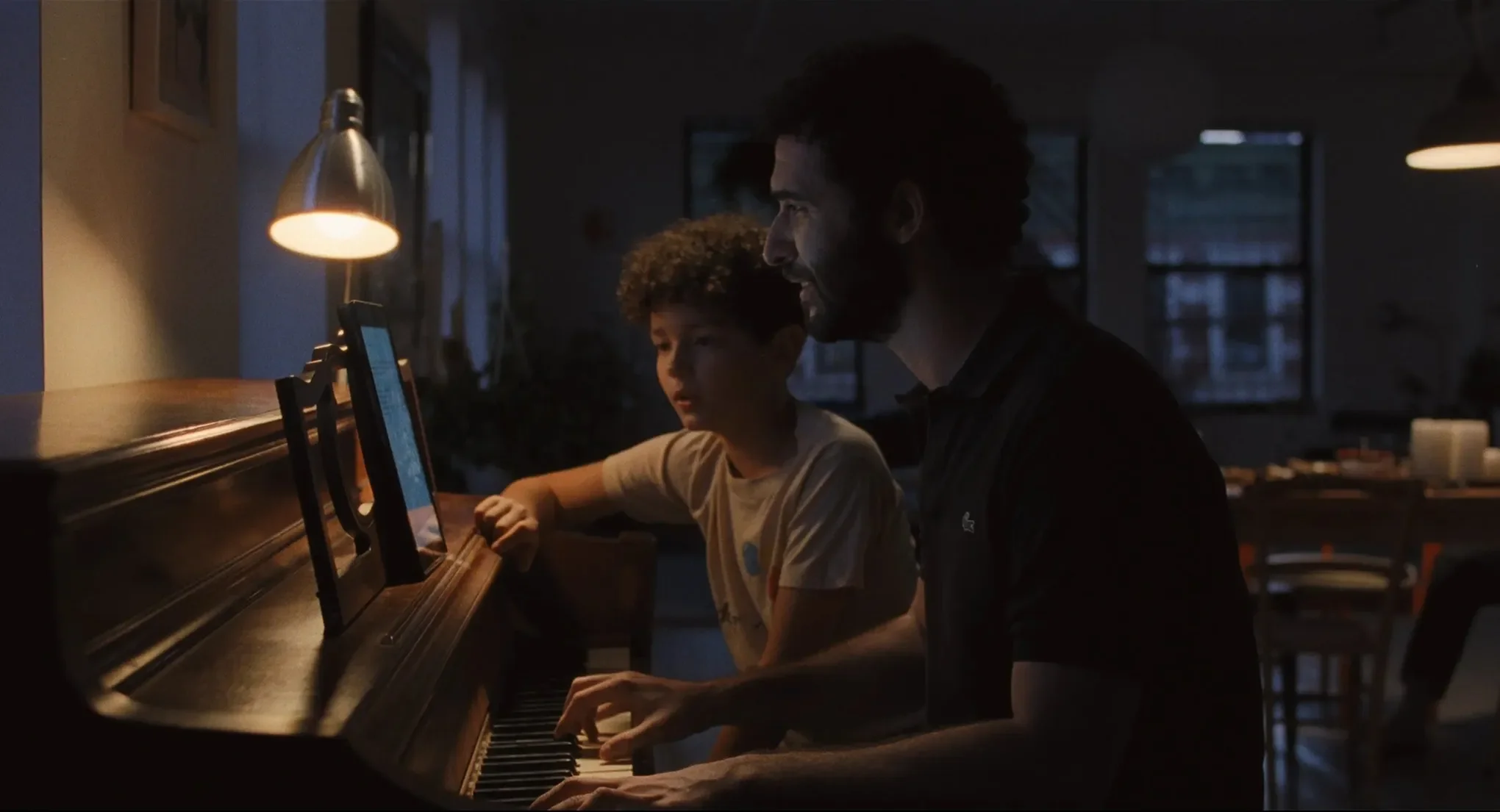
The kid is kind of a bad singer, actually. He’s not so perfect after all!
Overall: A-