
PROJECT HAIL MARY
Directing: B+
Acting: B+
Writing: B+
Cinematography: A-
Editing: B+
Special Effects: A
If you’re looking for an incredibly charming and entertaining science fiction flick, for the next several weeks your go-to choice will be Project Hail Mary, easily the best film of 2026 so far. This one ticks an incredible amount of boxes, and will work for people looking for different things. It’s going to be a kick for science nerds, assuming they don’t get too picky about accuracy—and, being a layman myself, it all seems perfectly plausible to me. Many people loved The Martian, the last film based on a best-selling Andy Weir novel, precisely because of how (mostly) scientifically accurate it was. There is no reason not to expect the same here.
It seems worth noting that I am in a somewhat peculiar position of perspective in the case of Project Hail Mary, given that I quite recently read the novel on which it’s based. I have said over and over that films should be judged on their own merits, but I possibly made a mistake by making that impossible for myself in this case. I read the novel too recently and cannot separate the two experiences, most notably in that this film, as directed by Phil Lord and Christopher Miller, and especially as adapted by writer Drew Goddard (who also adapted The Martian), is a great achievement in adaptation. But how do I know I only feel this way because I have read the novel? Would this film have been as easy to follow had I not read the novel? I’m honestly not certain—especially given that the film, even at 156 minutes in length, really felt to me like it rushed through a whole lot of the story.
Because a lot happens in this story: Ryland Grace (a perfectly cast Ryan Gosling), a middle school science teacher, through a whole lot of happenstance winds up as the Science Officer on the interstellar ship The Hail Mary, sent to investigate the one sun that has not been infected by a cellular alien life form, thereby dimming its power and thus threatening the life of the planet in its orbit that otherwise supports life—in the case of humanity: Earth. All the known suns within relative proximity have been infected, except this one that is roughly 12 light years away.
Grace is part of a three-person crew sent to study this sun and see if they can figure out why it is not infected and use that information to save Earth. He wakes up from an induced coma to find his two crew mades have died, but he doesn’t remember why he’s on this ship or how he got there. His process of figuring this out lasts through several chapters in the novel, complete with flashbacks serving as memories sporadically coming back to him; in the film, this happens over just the first few scenes.
And given that Grace wakes up alone on the Hail Mary, there are not a lot of characters in Project Hail Mary. The film does have 31 credited actors, but for a huge amount of screen time, Grace is the only character seen onscreen: Gosling truly carries this film, largely on the strength of his uniquely quirky charms, mixed with his improbable good looks. Cumulatively speaking, maybe half the run time, if not more, Gosling is the only human character we see. Through maybe the second half of the film, he is one of two characters, the other being “Rocky.” If you have read the novel you know exactly who that is; if you have seen the trailer you can easily guess who that is. This whole thing would be way more fun if you just watched the movie not knowing who the hell Rocky is at all, but if that were the case, why would you even be reading this review?
Any other characters are seen in flashback, which are Grace’s memories resurfacing as part of the plot mechanics of the novel, but function more as straightforward flashbacks in the film, providing us with backstory. Sandra Hüller is also very well cast as Eva Stratt, the largely humorless but compassionate leader of the international task force created to solve Earth’s problem. Grace also enlists the aid of a security guard named Carl (Lionel Boyce) as he runs his experiments and somehow learns about “astrophage,” the star-eating cells causing the cooling and potential environmental collapse of the Earth, faster than anyone else around the globe.
So we jump back and forth between Grace getting his bearings and slowly coming out of amnesia on the Hail Mary, and the flashbacks; this is mostly how roughly the first act of the film goes. In the next act, Grace learns he is not alone, and in the final act, Grace and Rocky do a lot of collaborative problem solving. This is specifically what characterizes the vast majority of the novel: a lot of science and problem solving. Weir had also provided a ton of fascinating detail about how evolution might have worked on another planet with a totally different atmosphere, and none of this gets covered in the film—we just see the result of this evolution onscreen, and therefore really never think about it in those terms. It’s too bad, because it’s pretty enlightening stuff, and gives the film adaptation less depth than its source material. But what can you do? The plot turns in the film are astonishingly close to those of the novel, and that alone pushed the run time past two and a half hours—all of it completely absorbing and entertaining.
It’s worth noting how stunning Project Hail Mary is to look at. This is a film with a ton of visual effects, almost none of it used to showboat; it’s all integrated well and serves the story. I’m tempted to say some of the exterior shots above an alien planet during Grace’s space walks are a little too vivid, like the cinematographer got a little slaphappy with the color filters, but what do I know? I’ve never done a space walk outside a spacecraft above an alien planet.
Where Project Hail Mary strikes a perfect balance is between the science fiction leaning heavily on plausible science, and a deeply affecting story about friendship. Readers of the book adore Rocky as a character, and there’s no reason not to expect the same of viewers of the film. This is a film that would be very deserving of Oscar nominations in many of the technical categories, including Production Design, Sound, and especially Visual Effects. I don’t often pay that much attention to Original Score but Daniel Pemberton’s original score here is also wonderful.
Honestly I struggle to come up with much in the way of criticism of this movie. I suppose one thing I noticed was the implausibly wide array of changes of clothes Grace seems to have on this ship, which feel only designed to add to his personality (and Gosling has that in spades already). But this doesn’t seem worth nitpicking about; it’s a detail that will hardly get noticed by most viewers and is just part of the visual medium that is movie making. Project Hail Mary is fascinating, suspenseful, and at times even moving—everything a movie like this is meant to be. The people who made this movie understood the assignment and knocked it out of the park.
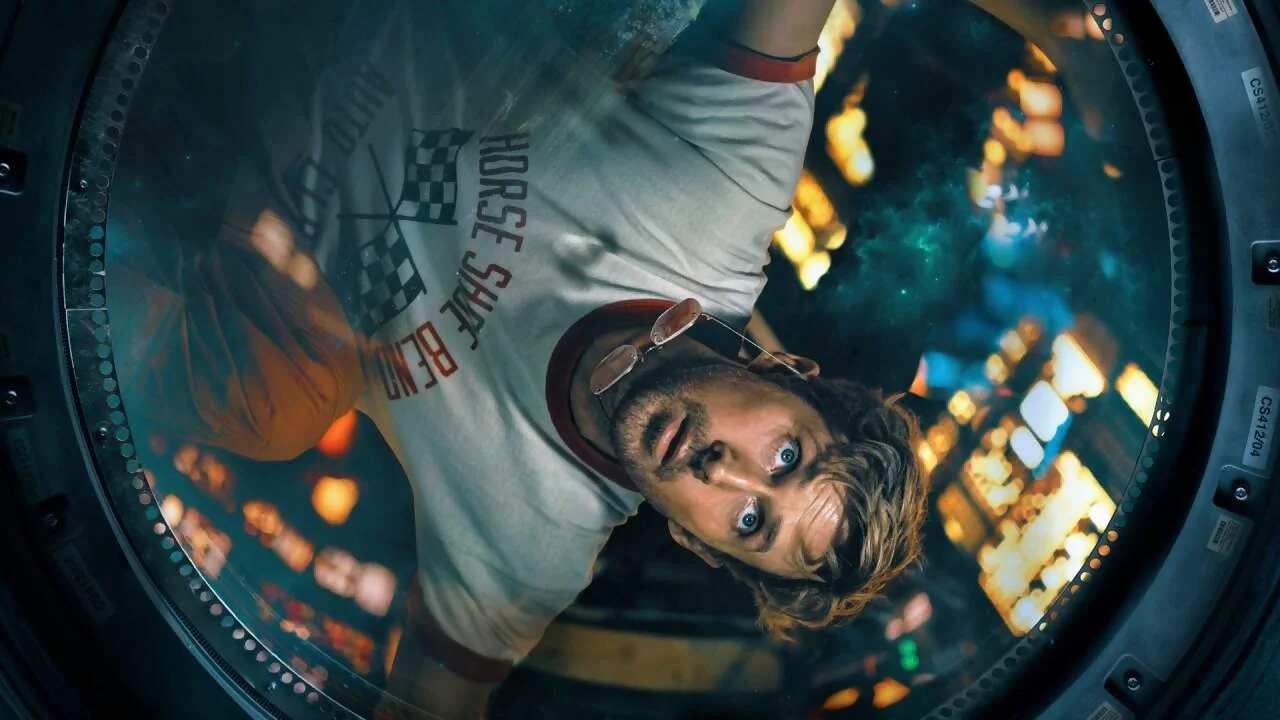
It’s everything you want and more.
Overall: A-